Mooncode

Mooncode Thumbnail

YEAR

2026

CONTEXT

Collaborative

[Collaborative]

KEYWORDS

Interactive Product

Web–Hardware System

Temporal Design

ROLE

PRODUCT & HARDWARE DESIGN

Design

Blender, Fusion, Figma

Systems

Arduino

Development

VS Code

Project Overview

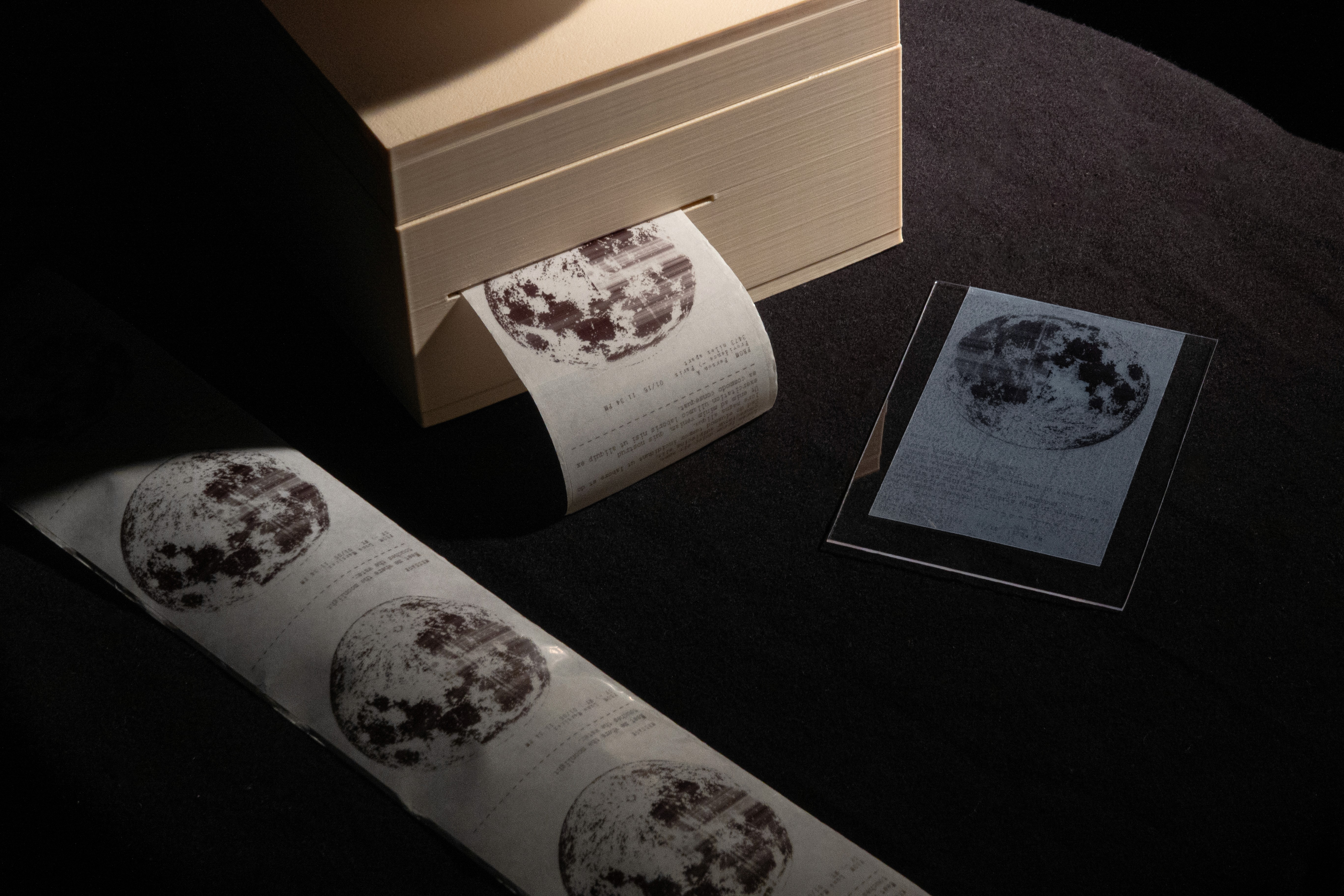
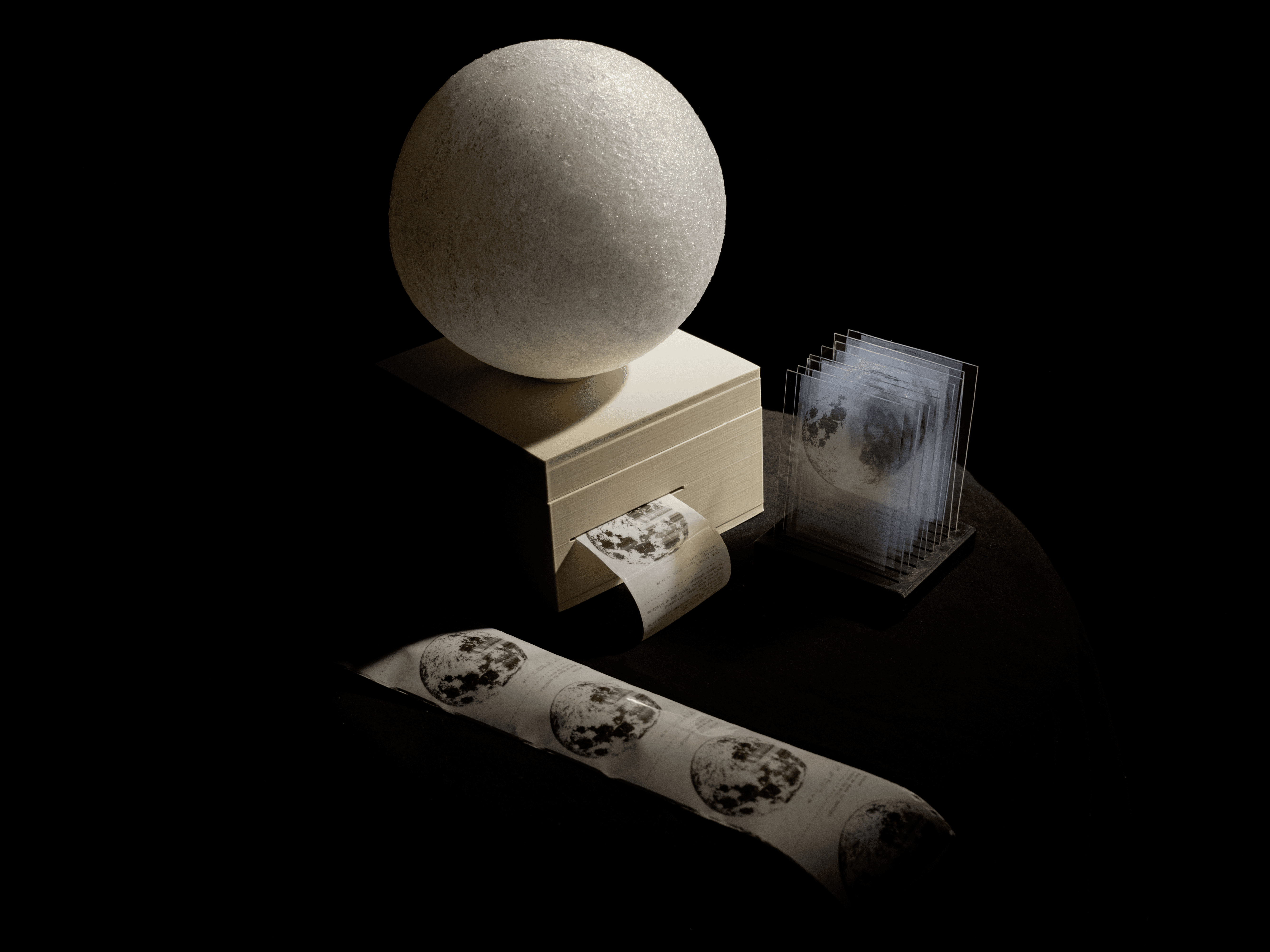
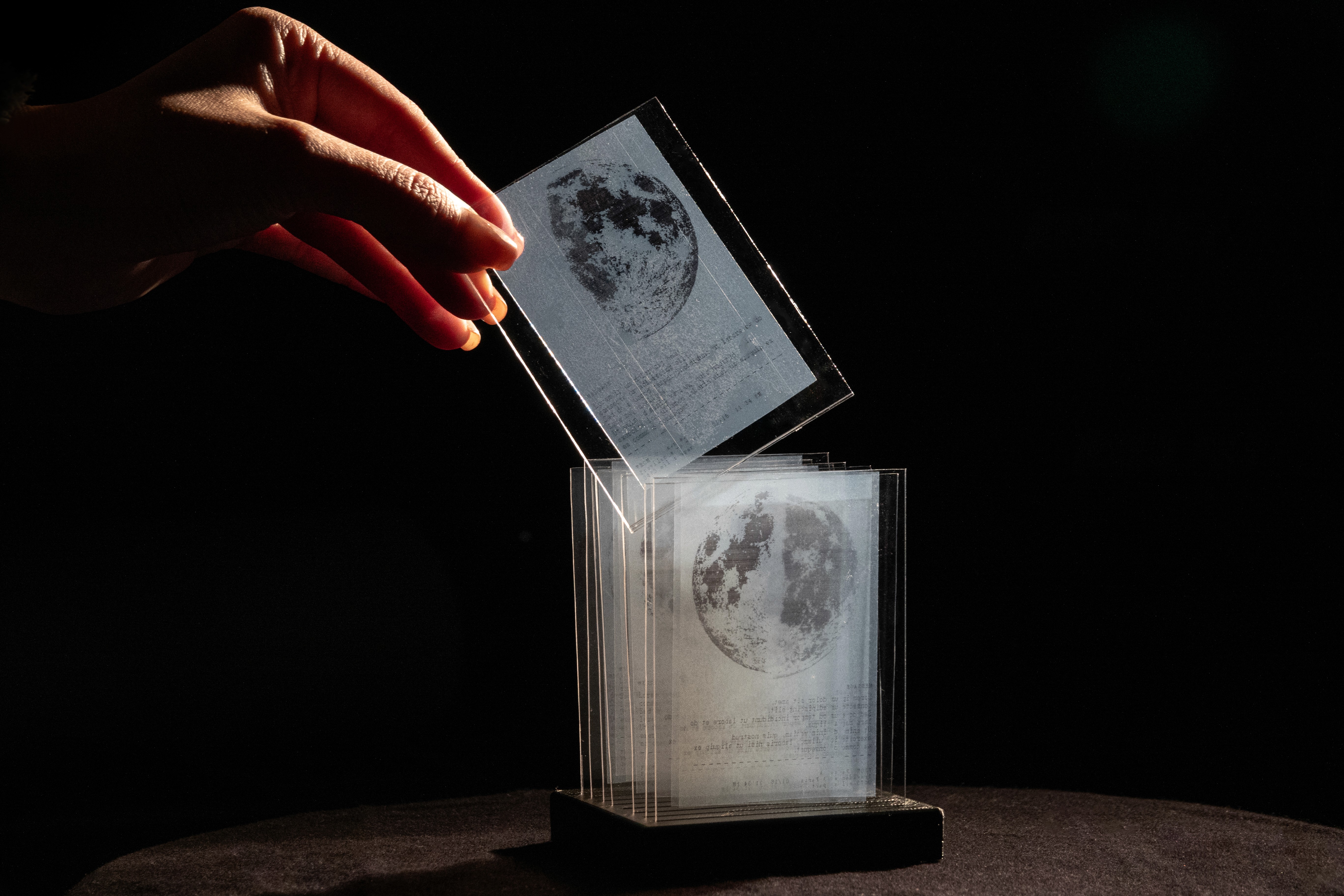
Mooncode is an interactive object and web experience for people in different places but under the same moon, built around the shared ritual of looking up at the night sky. Through the website, one person captures the moon to send a message, while the other unlocks it by photographing the moon from their own location. Instead of appearing on a screen, the message is printed by a moon-shaped lamp whose rotating inner shell reflects the current lunar phase, allowing each exchange to become part of a tangible record of shared moments across a full moon cycle. By combining digital verification, physical output, and celestial time, Mooncode transforms communication into a slower, quieter, and more material experience of connection.
Mooncode Image 1
Mooncode Image 1
Mooncode Image 2
Mooncode Image 2
Mooncode Image 3
Mooncode Image 4

Problem

Digital tools make it easy to stay in touch across distance, but they often leave little room for slowness, ritual, or emotional depth. When connection is reduced to quick exchanges on a screen, the feeling of intimacy can become harder to hold onto. The challenge is not simply how to communicate across distance, but how to create a shared experience that feels intimate, tangible, and emotionally resonant.


Research


interviews

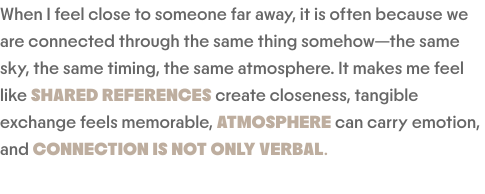
Texting is easy, but sometimes it feels too immediate and disappears just as quickly. I think I miss the feeling of ritual over immediacy—something a little slower, where anticipation adds meaning and the moment feels more special.

These research led us to explore a slower and more poetic form of distant communication—one shaped by ritual, shared observation, and the moon as a common point of reference. Instead of prioritizing instant exchange, Mooncode creates a more reflective experience of connection through anticipation, memory, and physical output.

Insights

Sketches & Prototypes

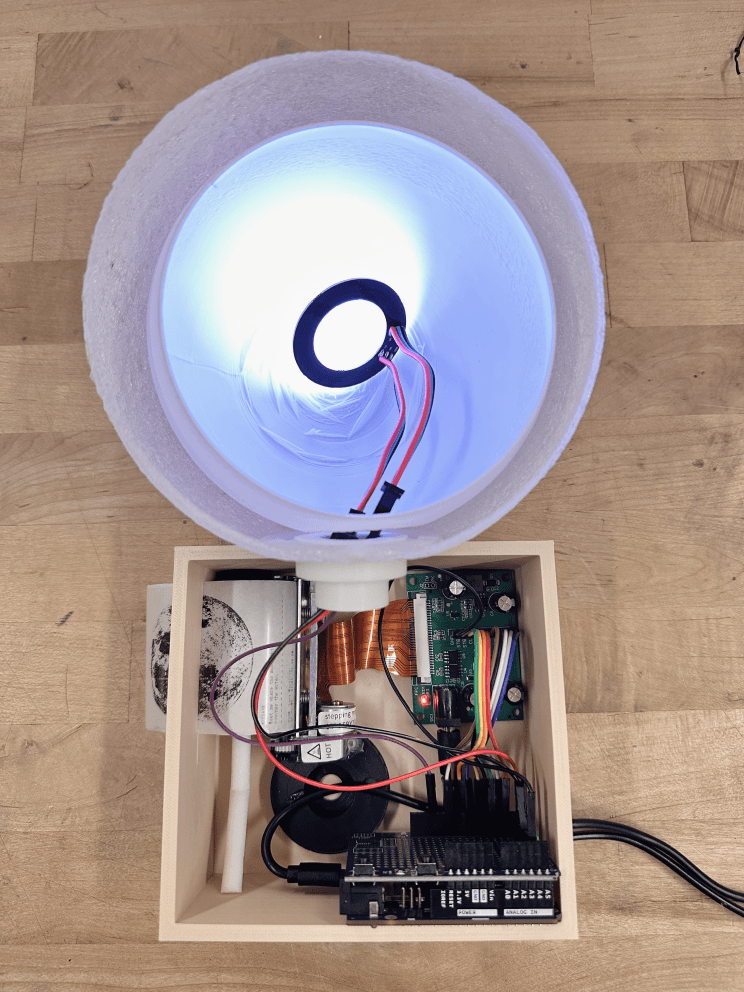
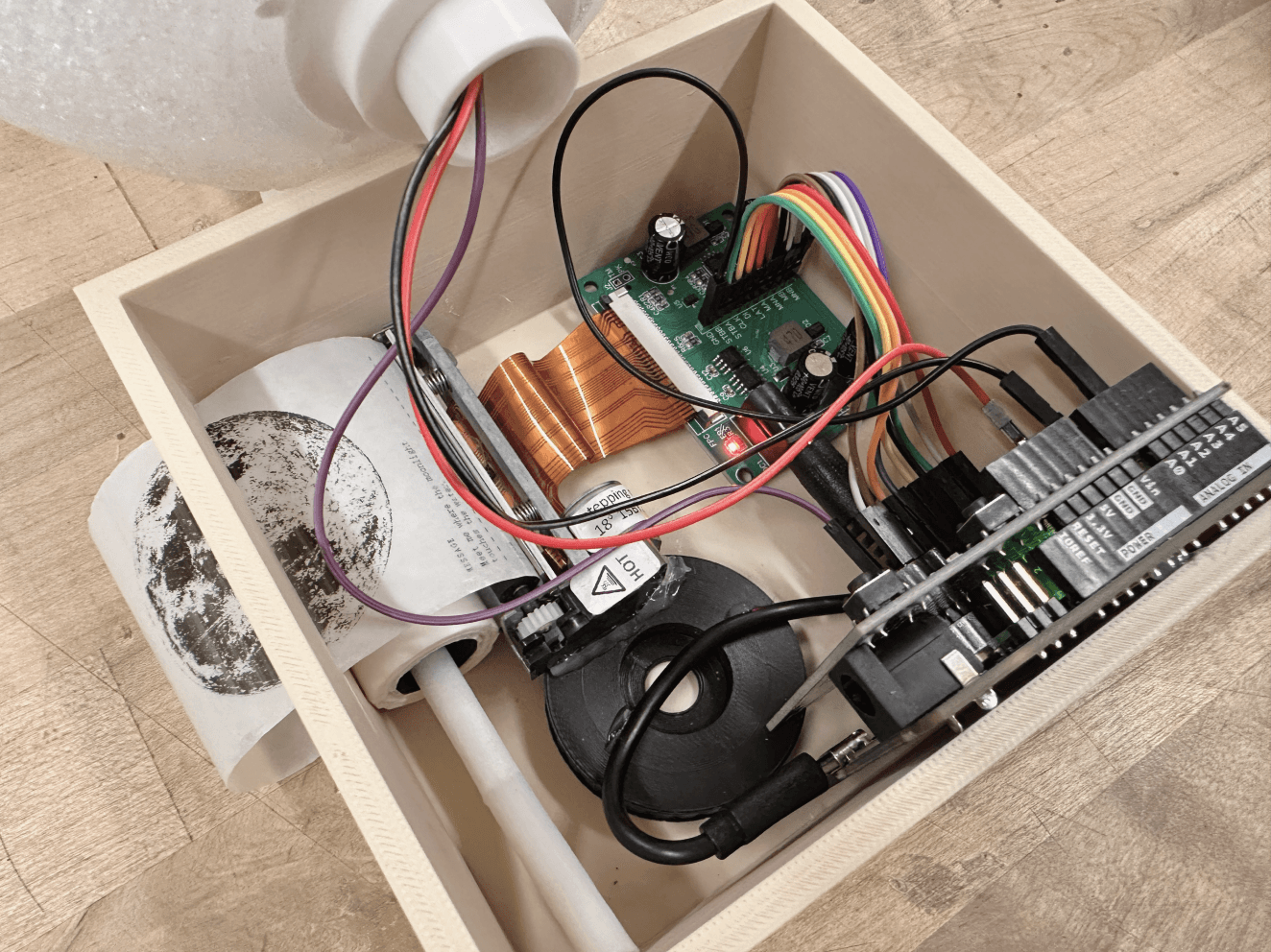
Building on our research into ritual, anticipation, and tangible exchange, we wanted the final form of Mooncode to carry both a shared atmosphere and a lasting trace of communication. This led us to combine a moon lamp with a printer: the lamp creates a quiet ambient presence tied to the moon as a shared point of reference, while the printed messages turn each exchange into a physical record that can be kept, displayed, and revisited over time. Rather than disappearing like a message on a screen, each interaction becomes part of a growing archive of shared moments, making distant connection feel more material, memorable, and emotionally lasting.
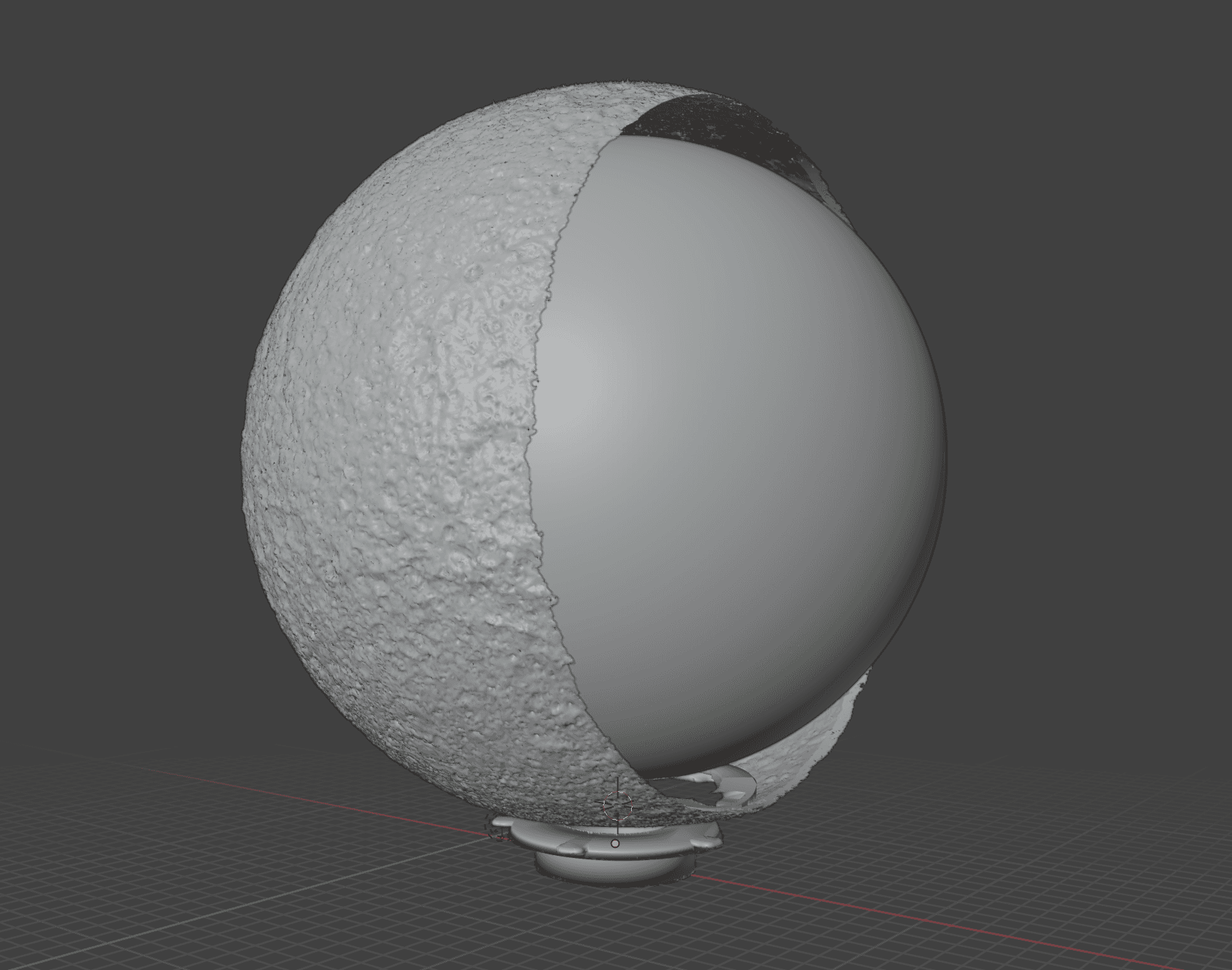
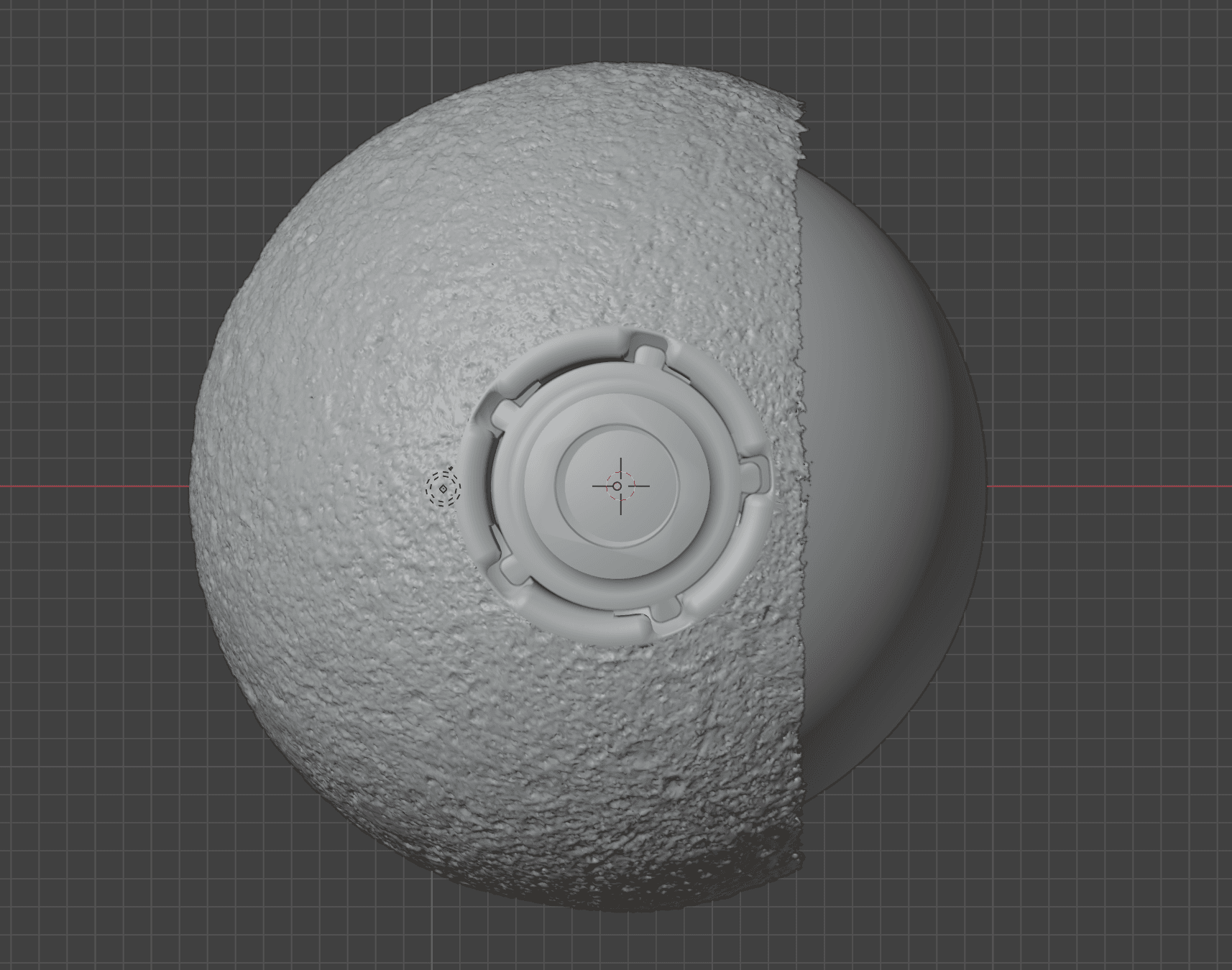
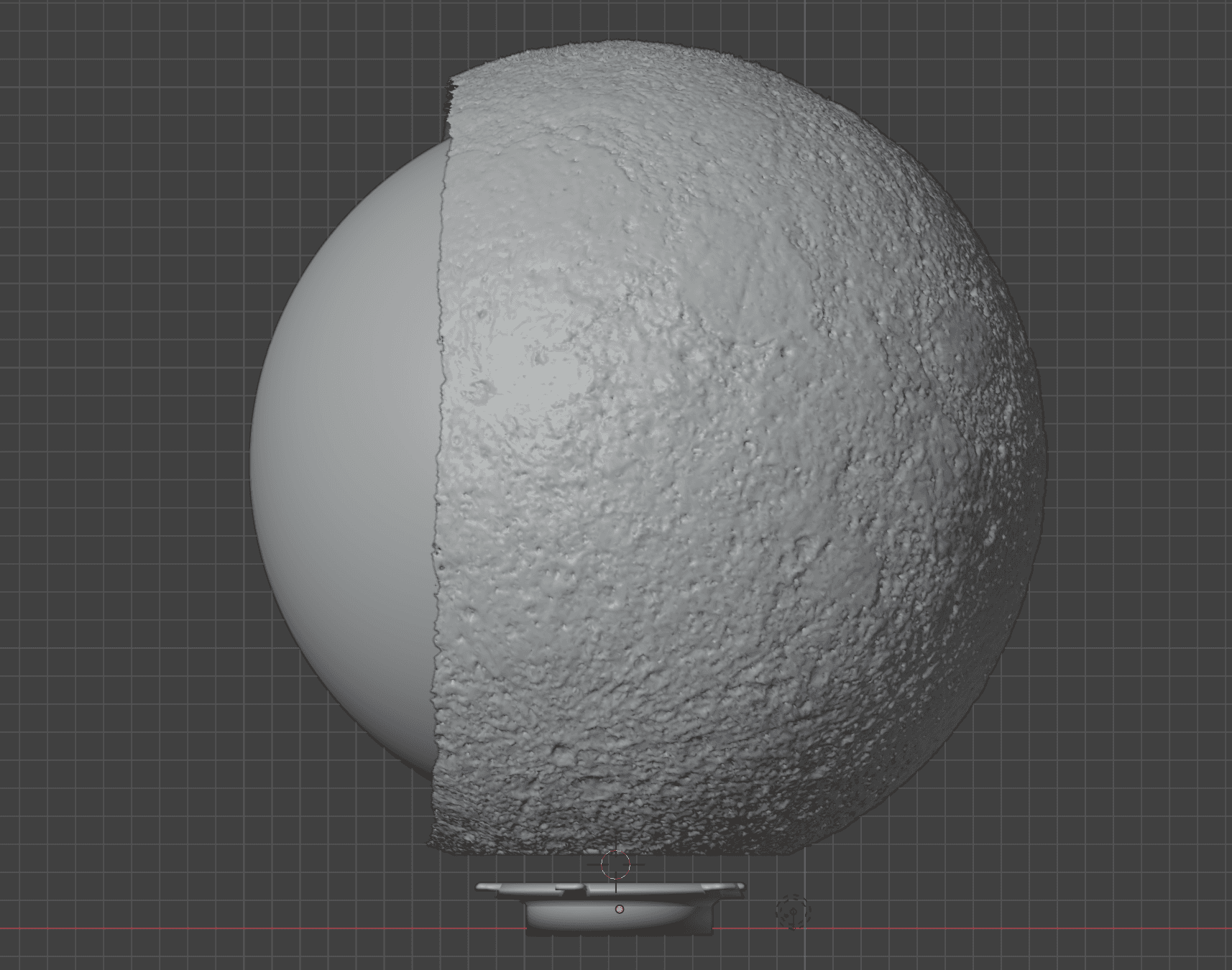
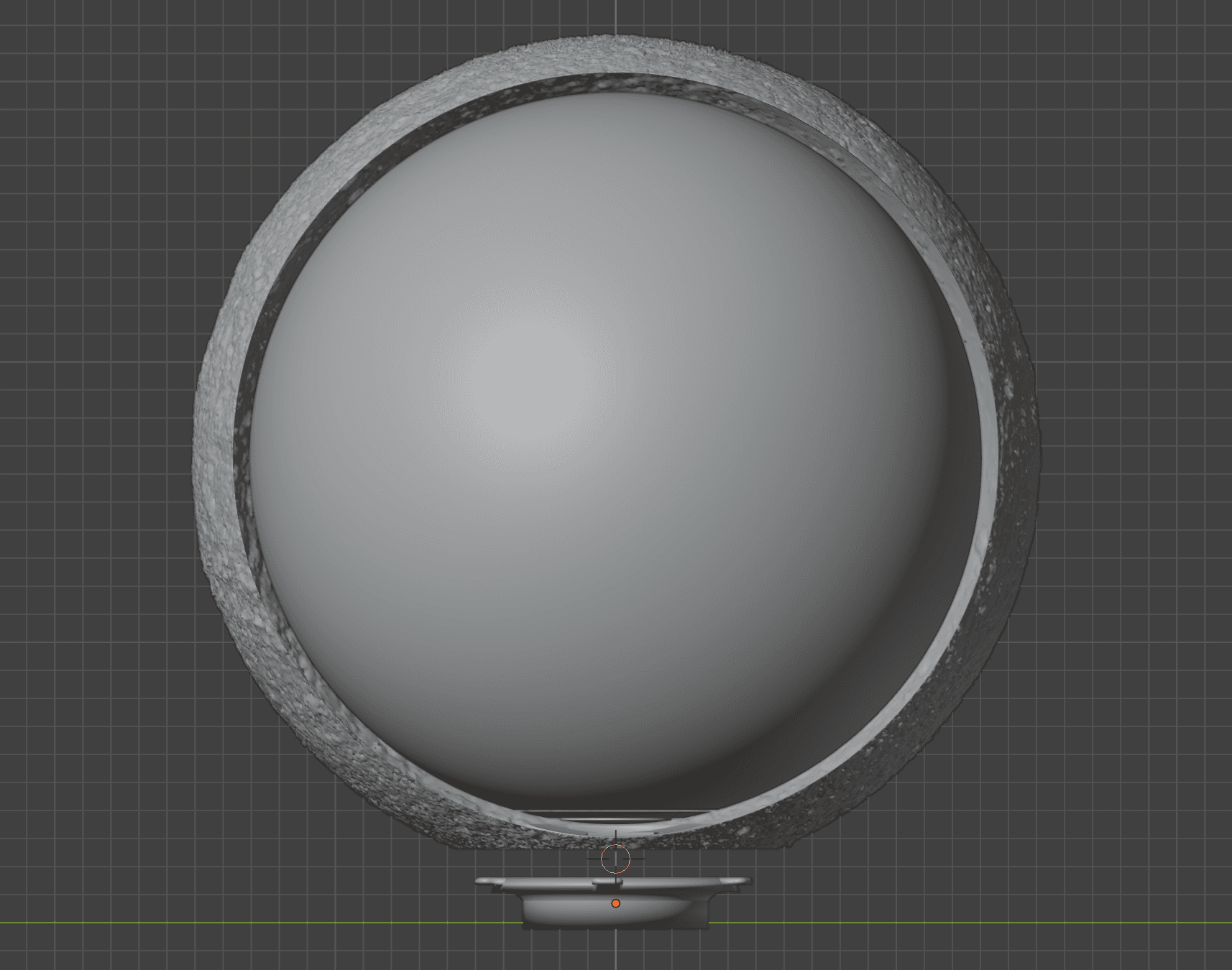
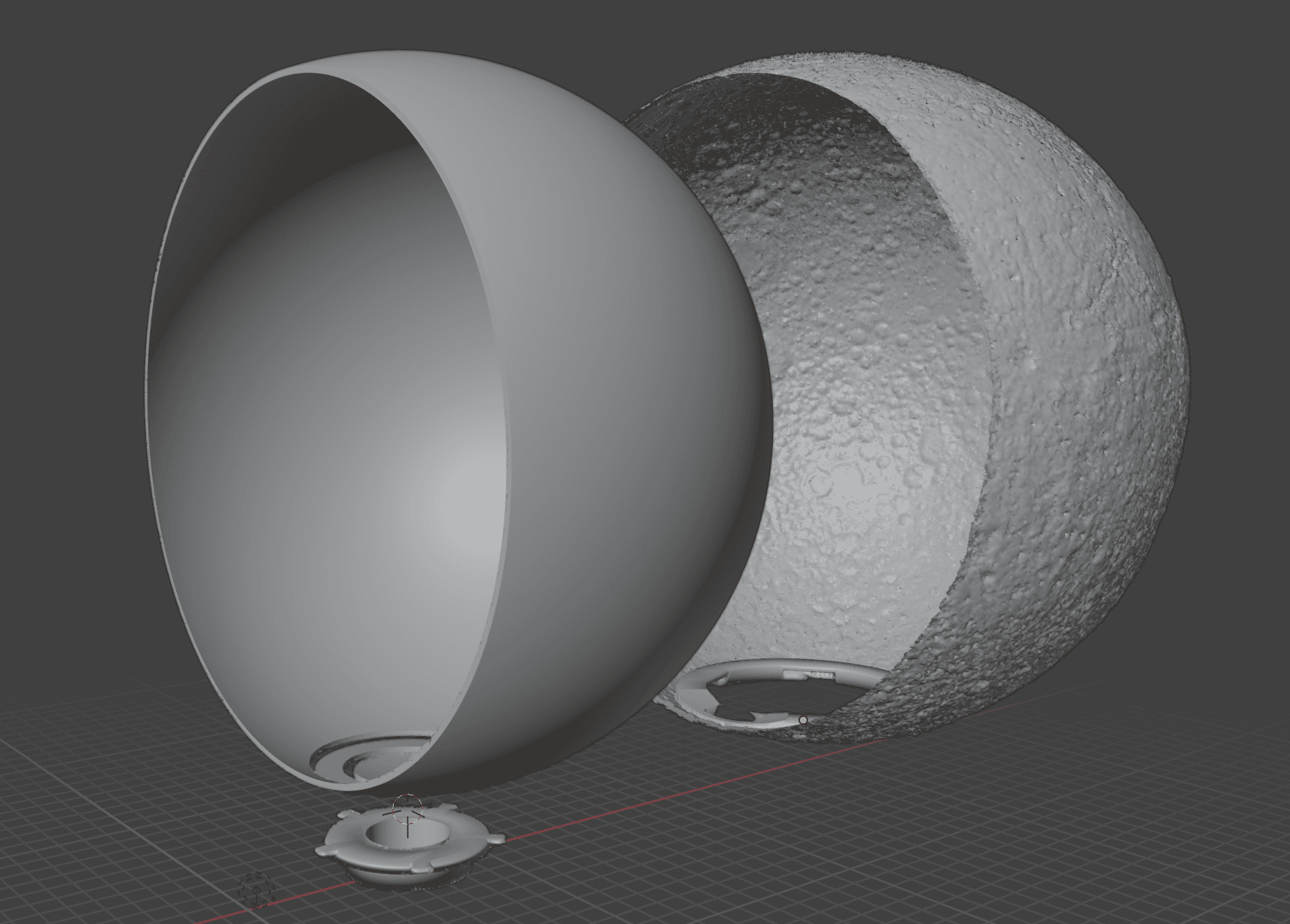
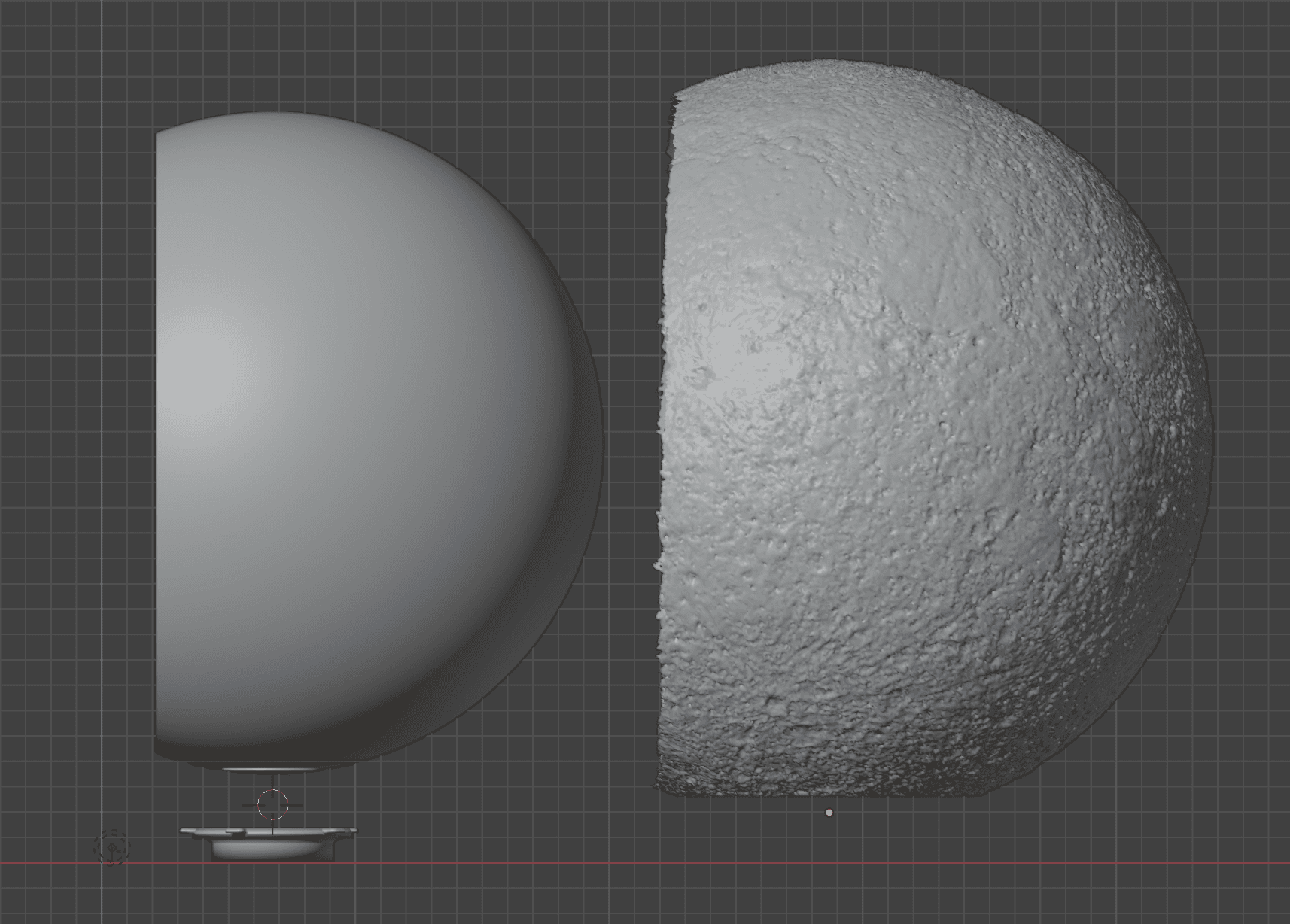
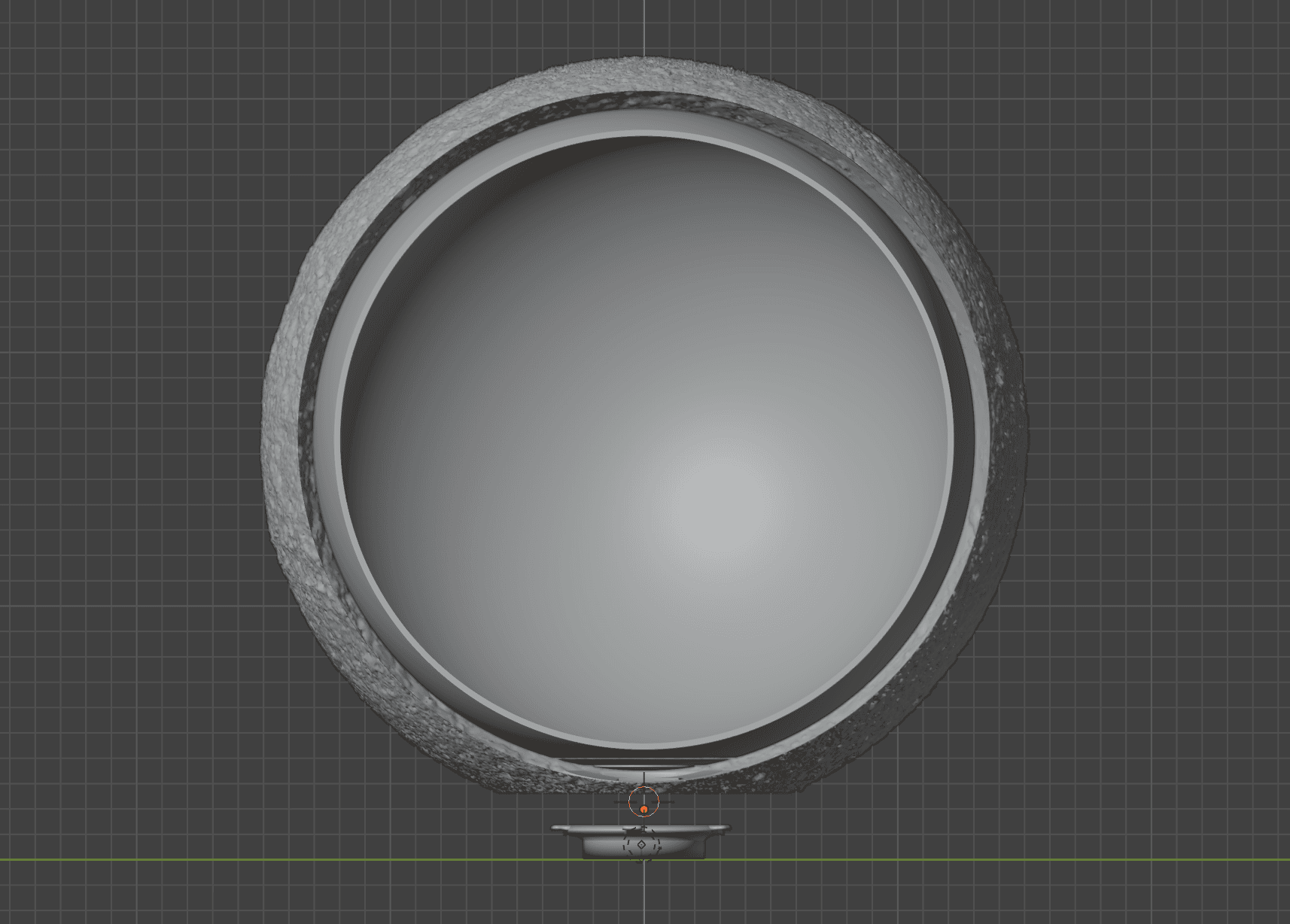
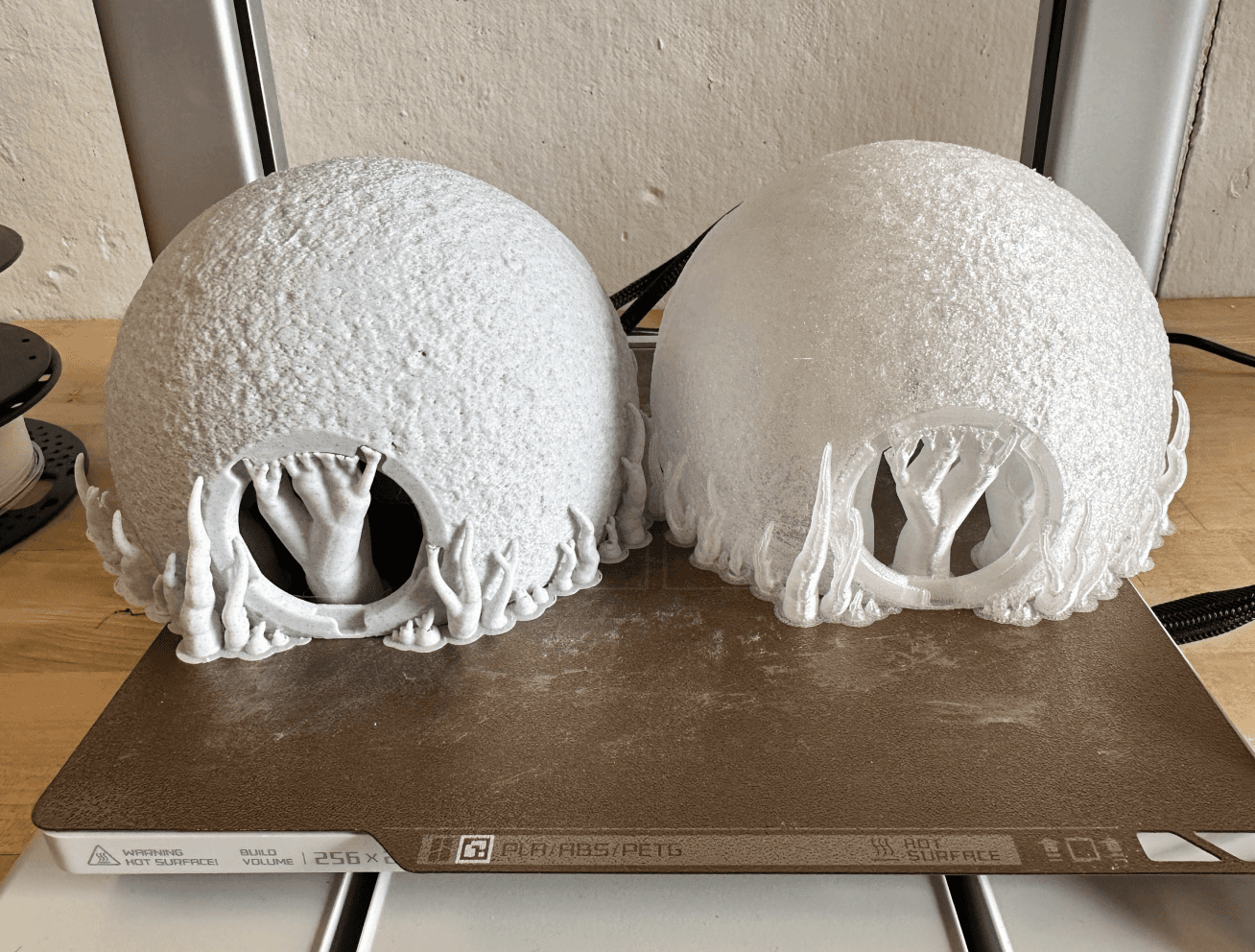
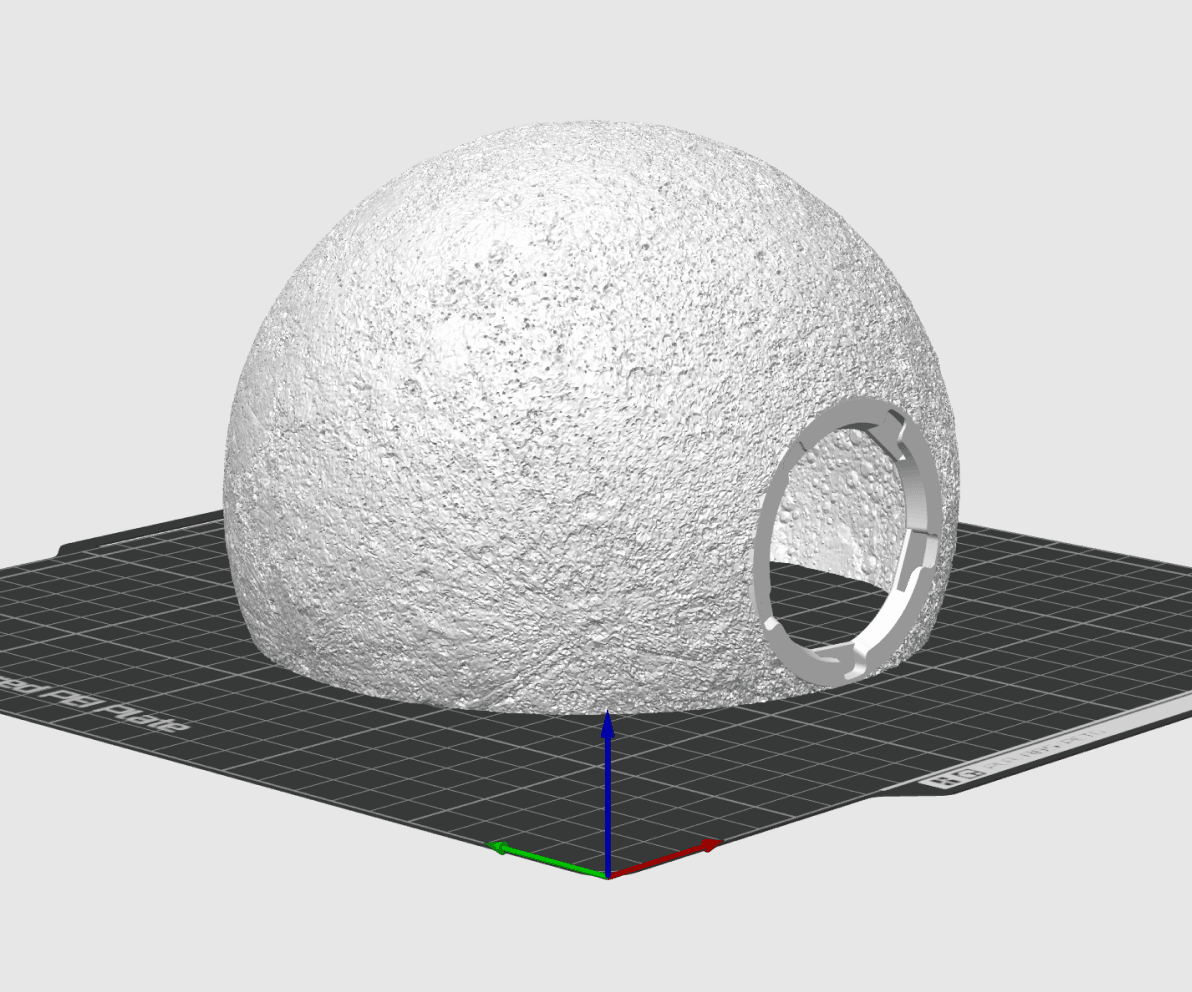
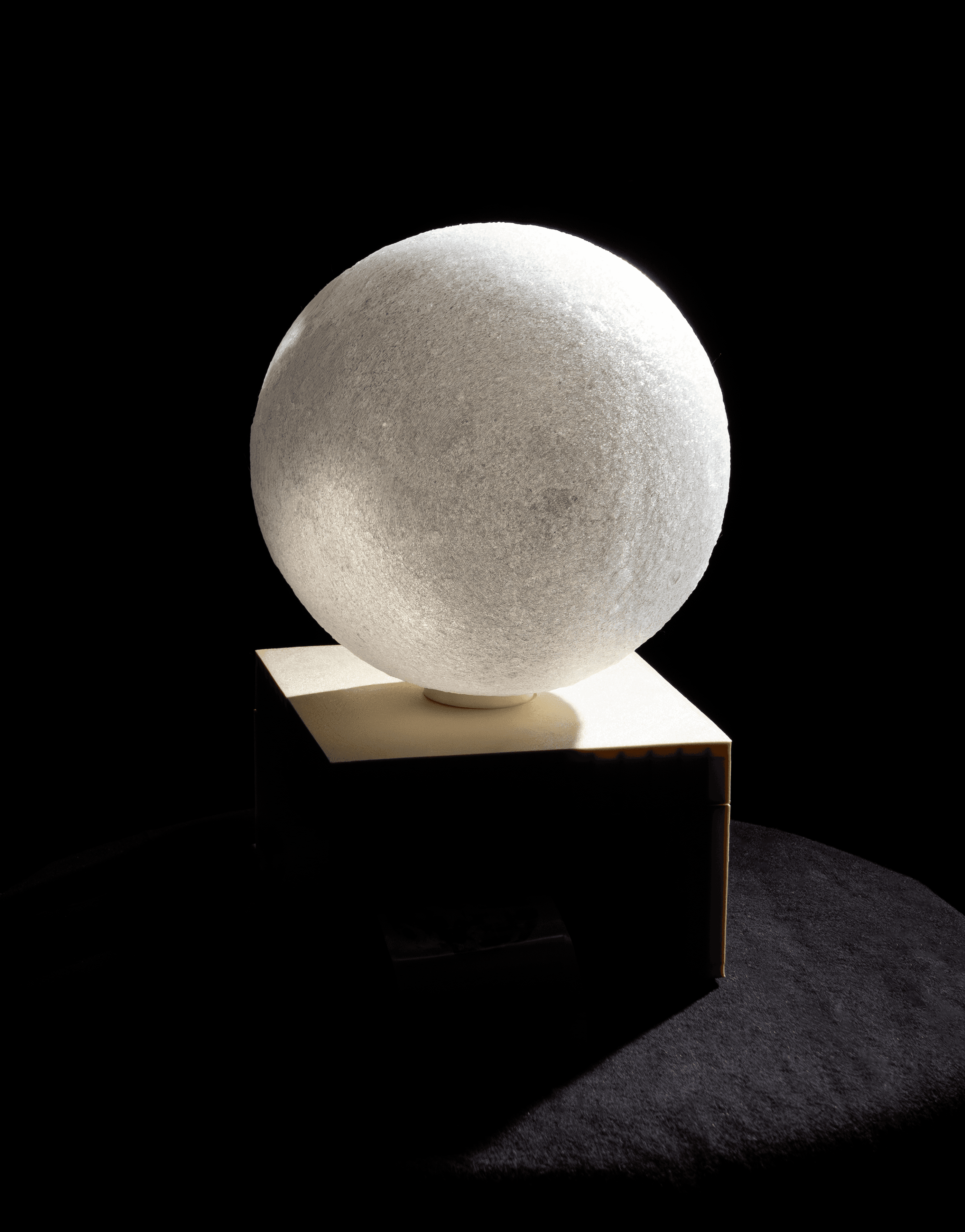
To express the changing lunar cycle in a physical form, I designed the lamp using two moon shells paired with a rotatable base. An outer textured shell and an inner smooth shell work together so that, as the inner structure rotates, different portions of the illuminated surface are revealed, allowing the object to demonstrate multiple moon phases. This component system helped translate the moon’s shifting appearance into a tangible mechanism, making the lamp both a functional light object and a physical representation of celestial change.

I developed the moon shells through 3D printing and material testing, experimenting with different filament types, colors, and surface textures to find a finish that could best evoke the moon’s tactile, cratered appearance while still diffusing light effectively. These iterations helped refine both the visual texture and the shell’s translucency. I then integrated a thermal printer and LED lighting system into a single object, combining the moon lamp with a compact printed-message output so the piece could function as both an ambient light and a device for receiving tangible communication.

components

technology

User Tests


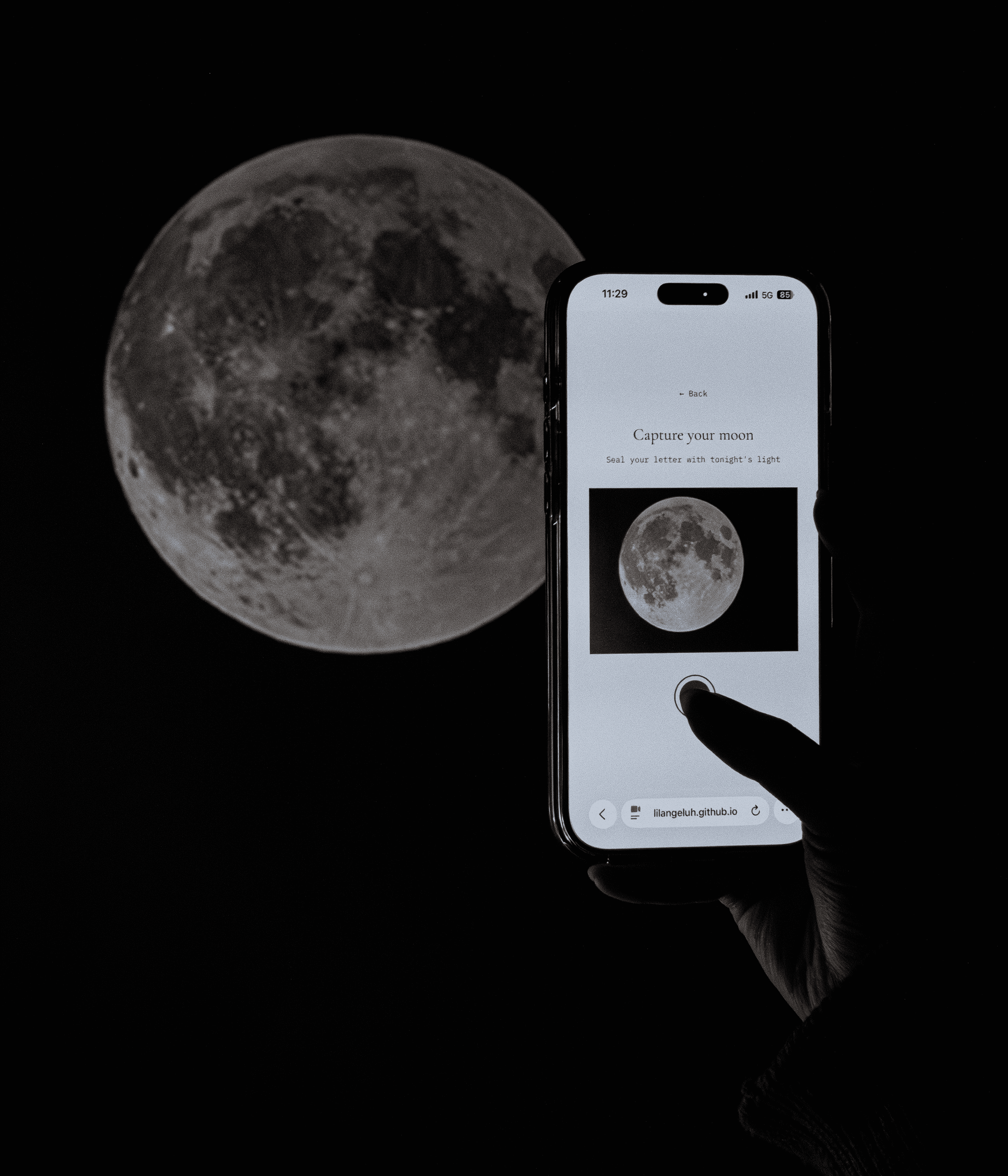
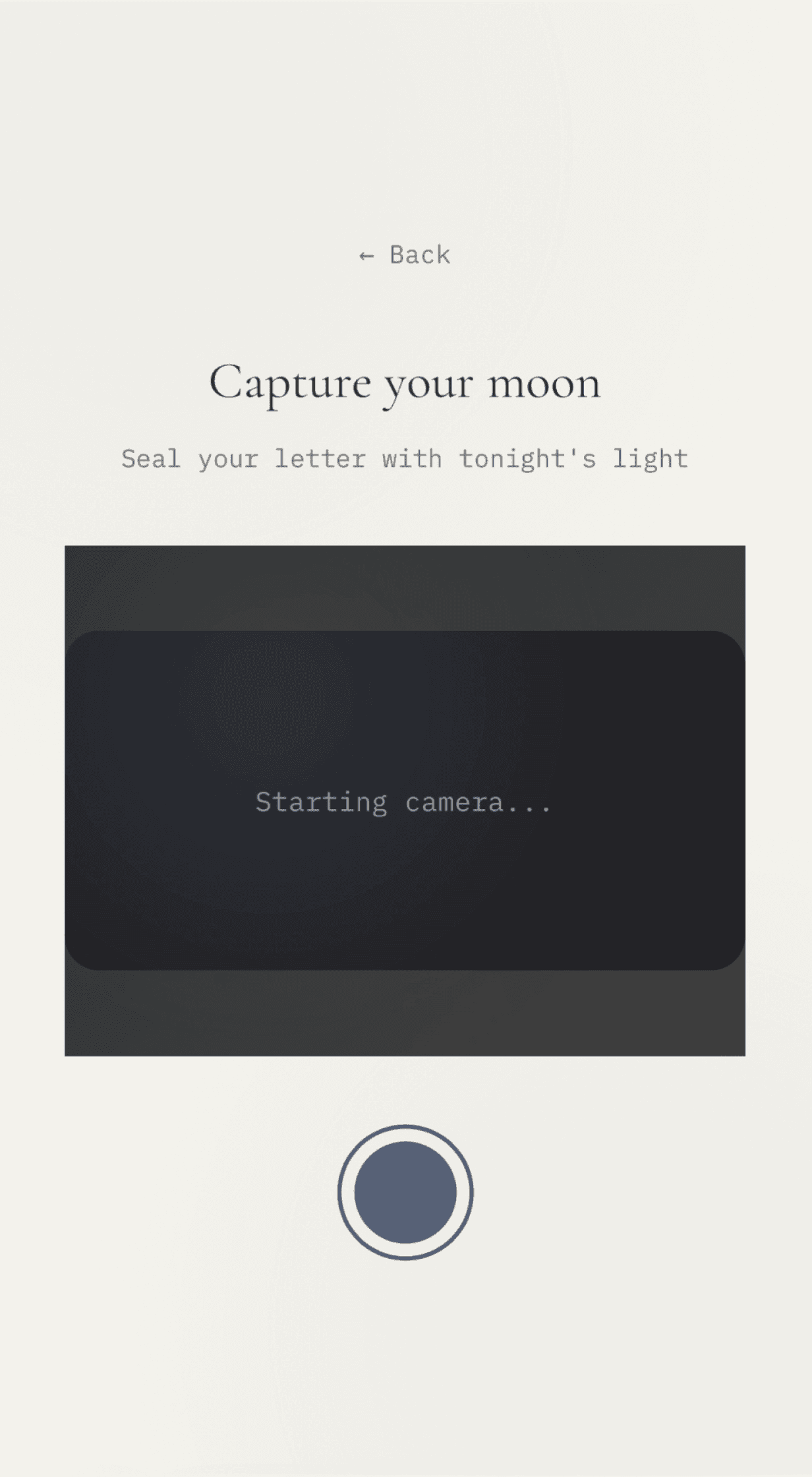
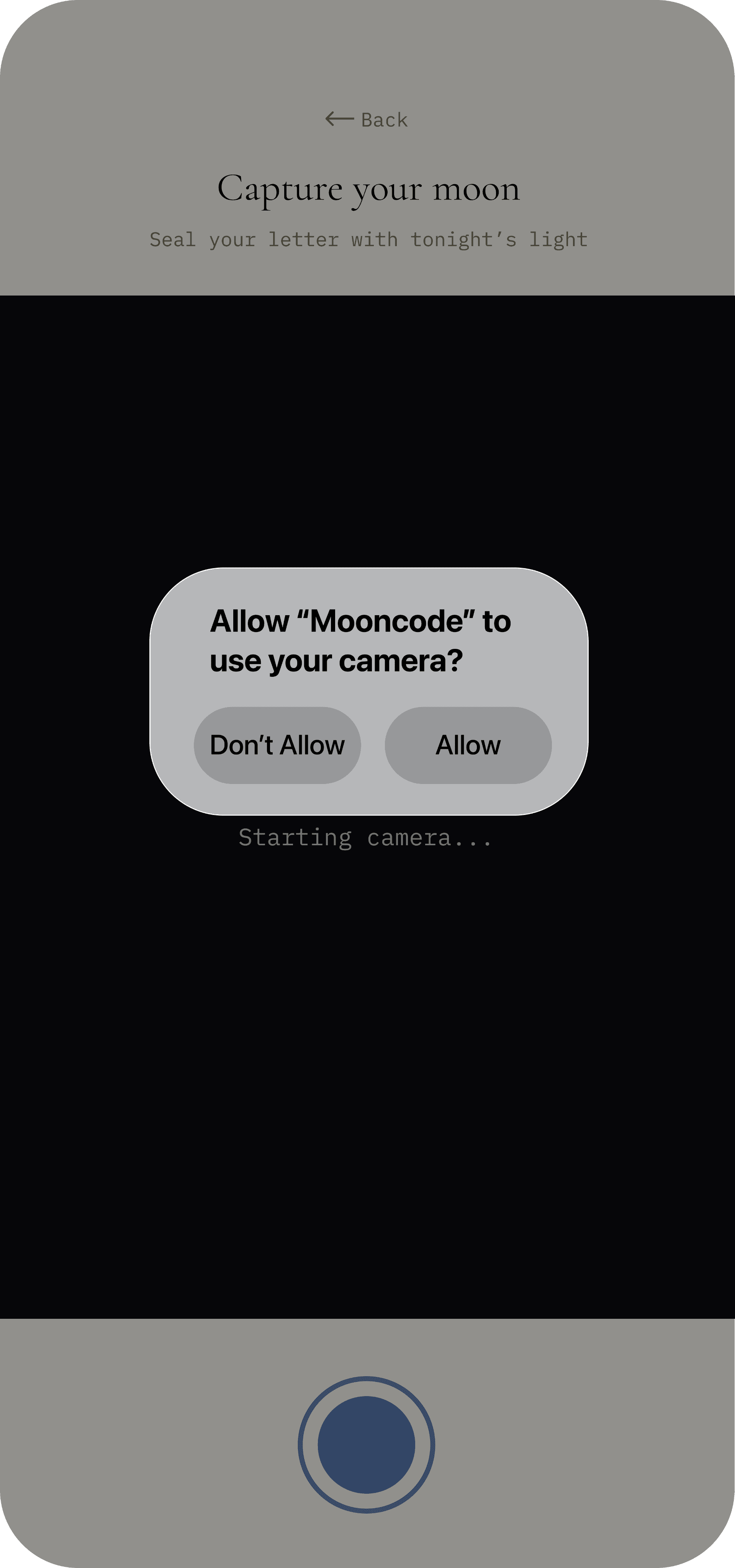
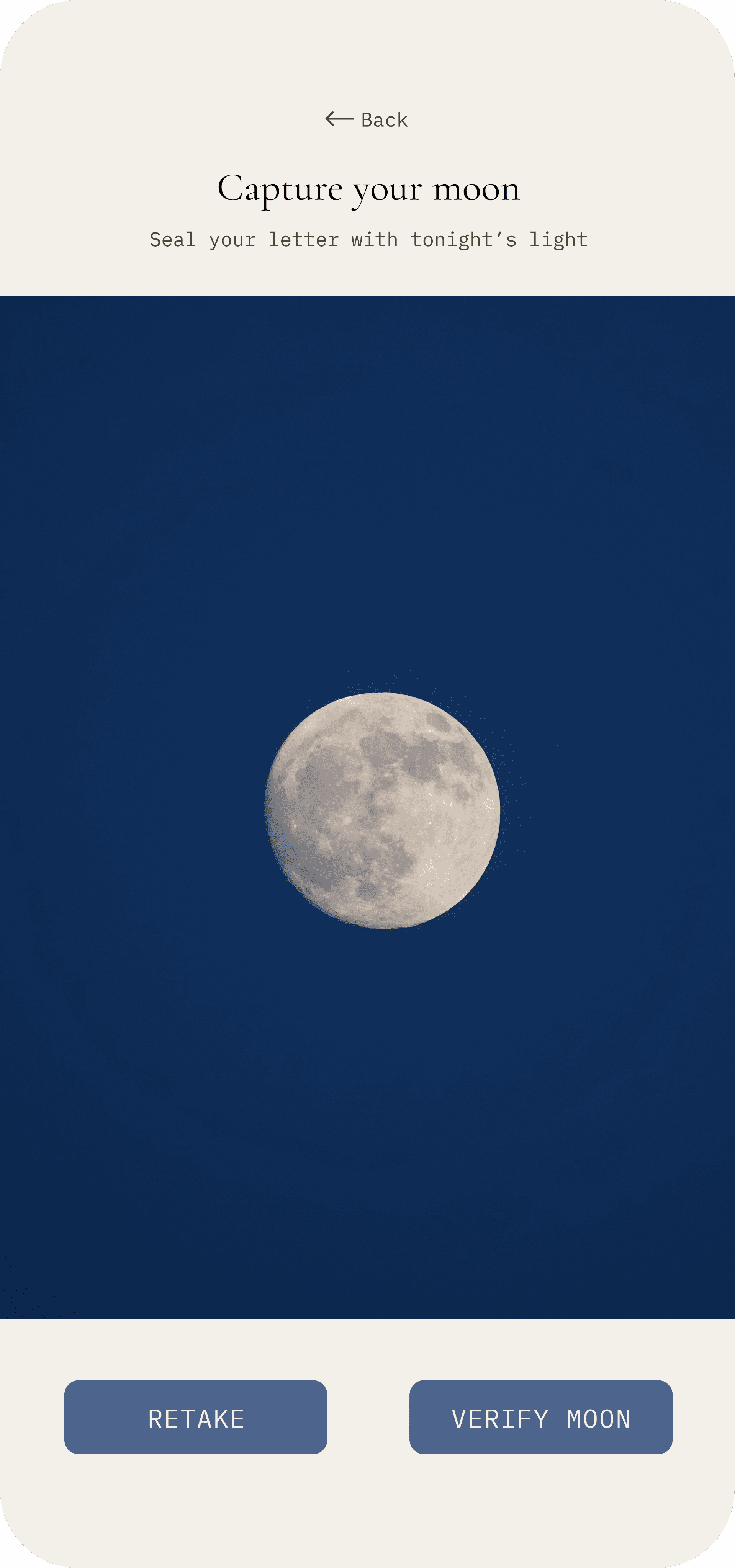
Through user testing, we found that the original photo-taking interface made it harder for people to frame and capture the moon clearly. In response, we revised the app UI by enlarging the photo capture area, giving users a bigger and more focused camera view that made the interaction feel more intuitive and easier to use. This change helped the moon-capturing step feel less restrictive and better aligned with the ritual of looking up and photographing the night sky.

app user test

Seal your letter with tonight’s light

Starting camera...

Back

Capture your moon

design Outcome


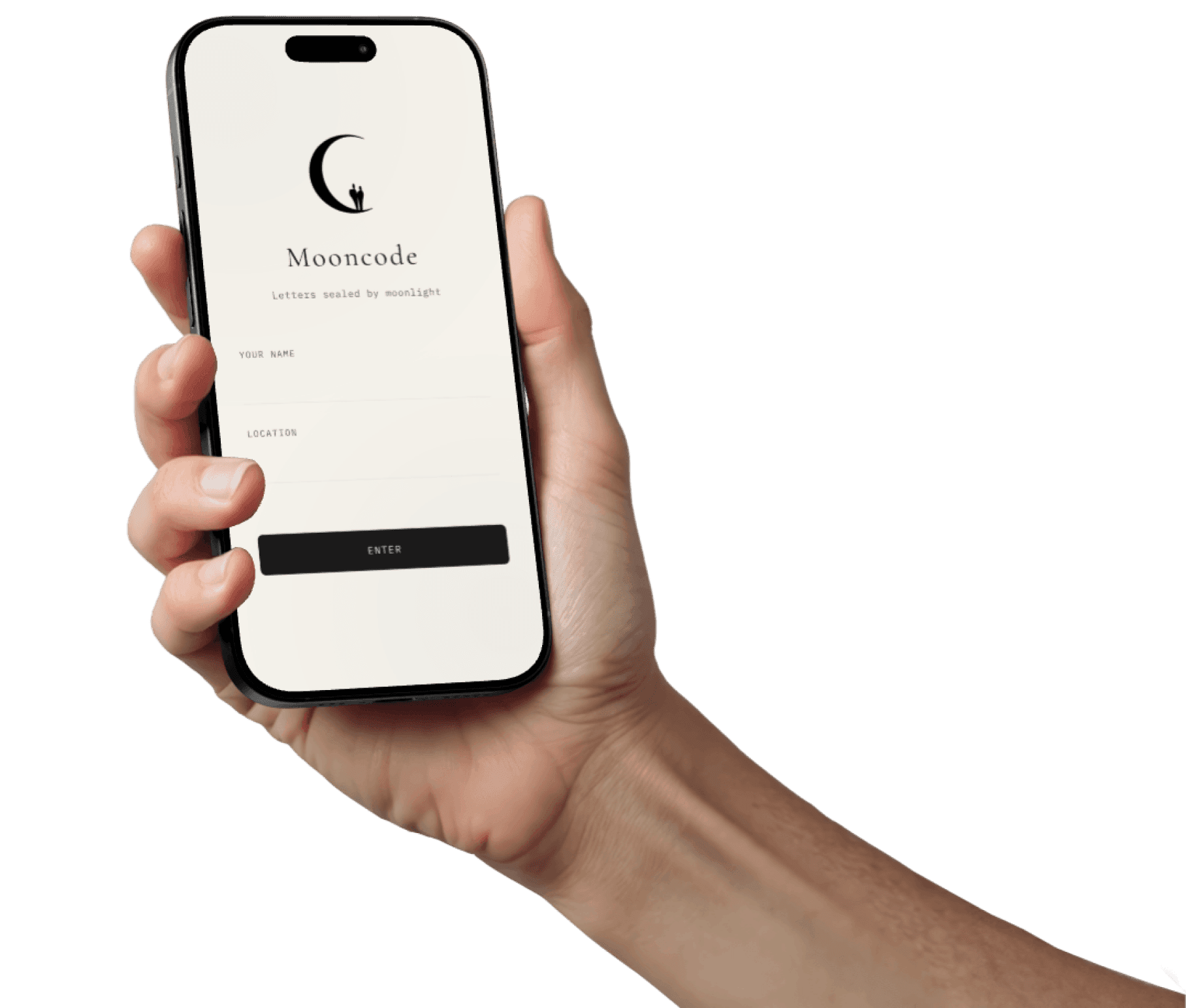
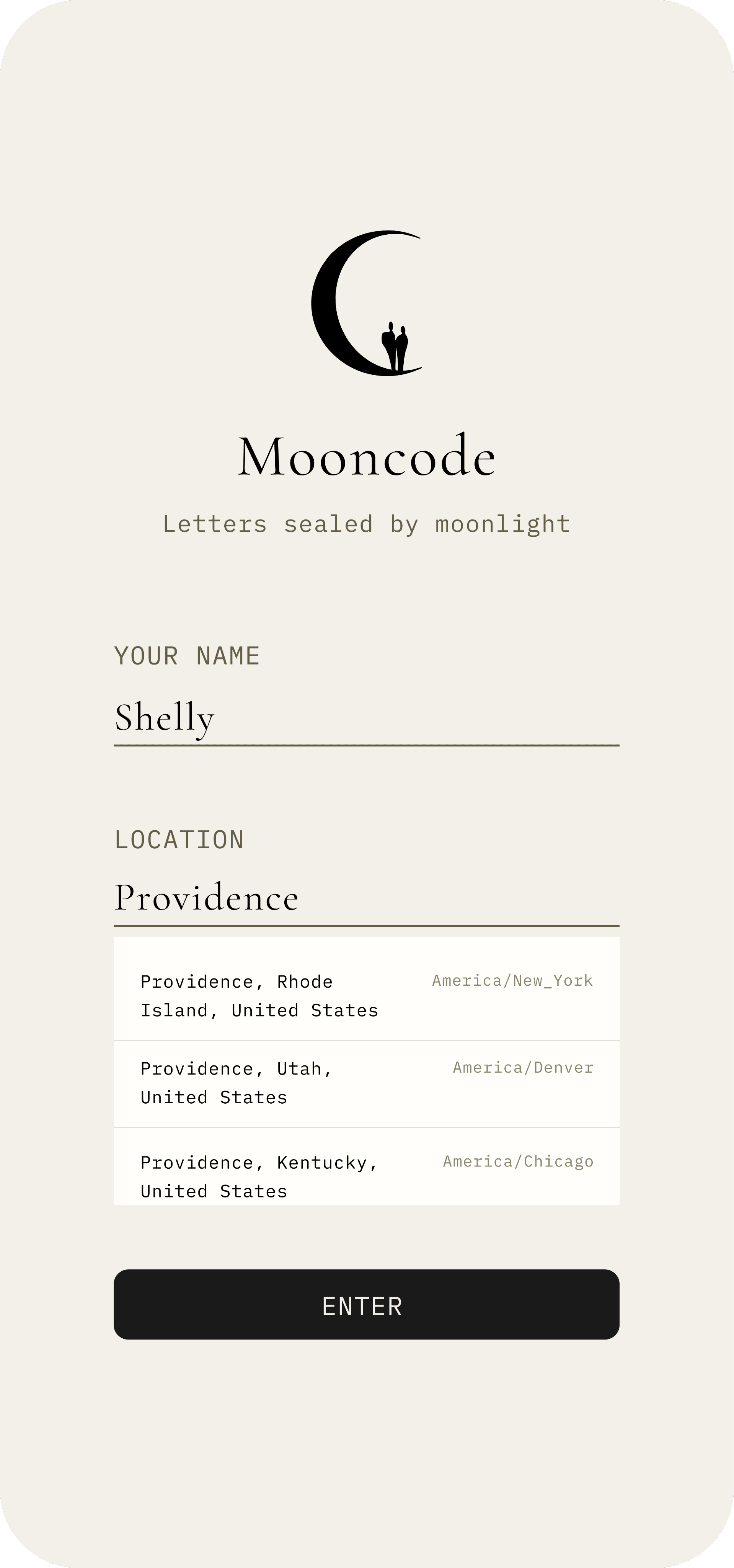
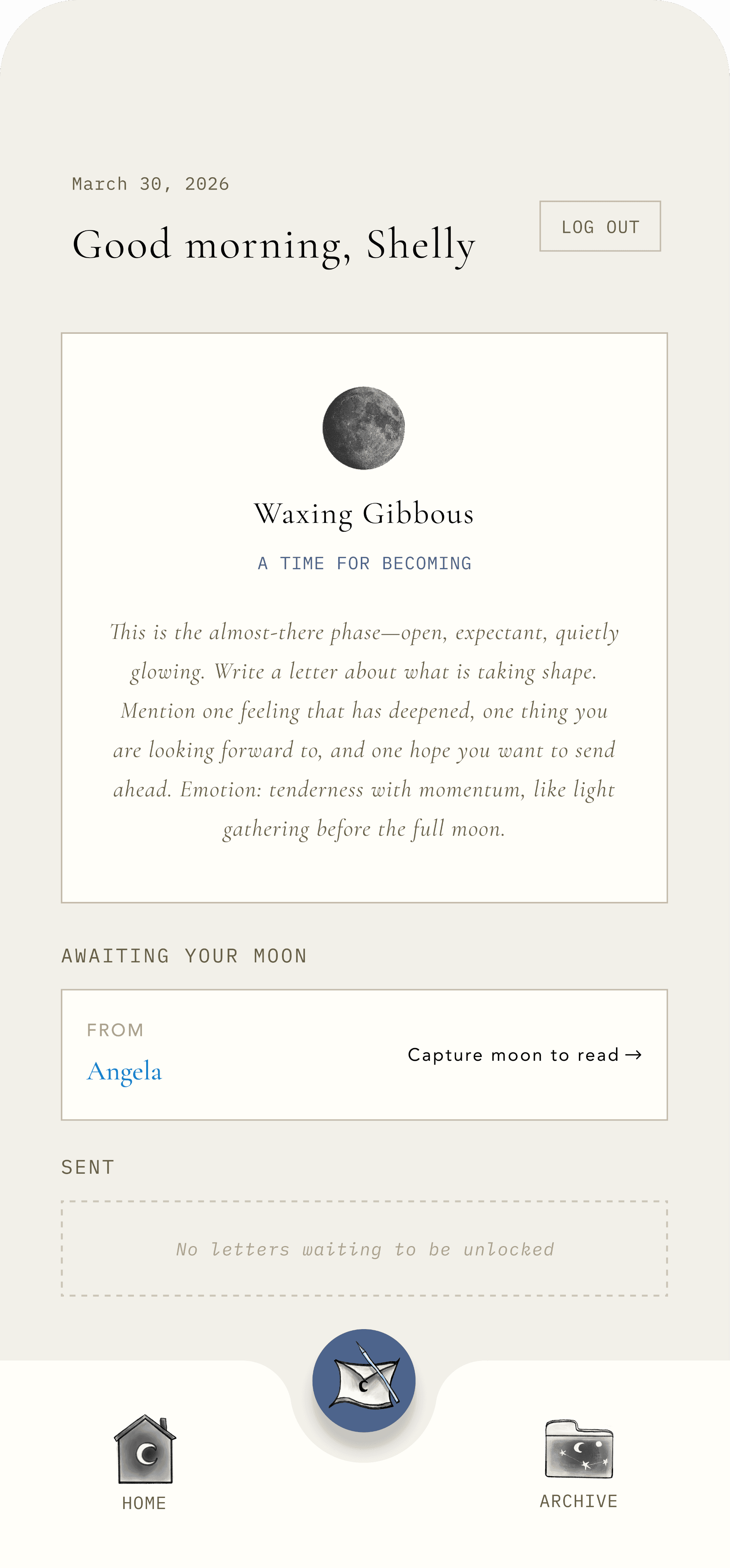
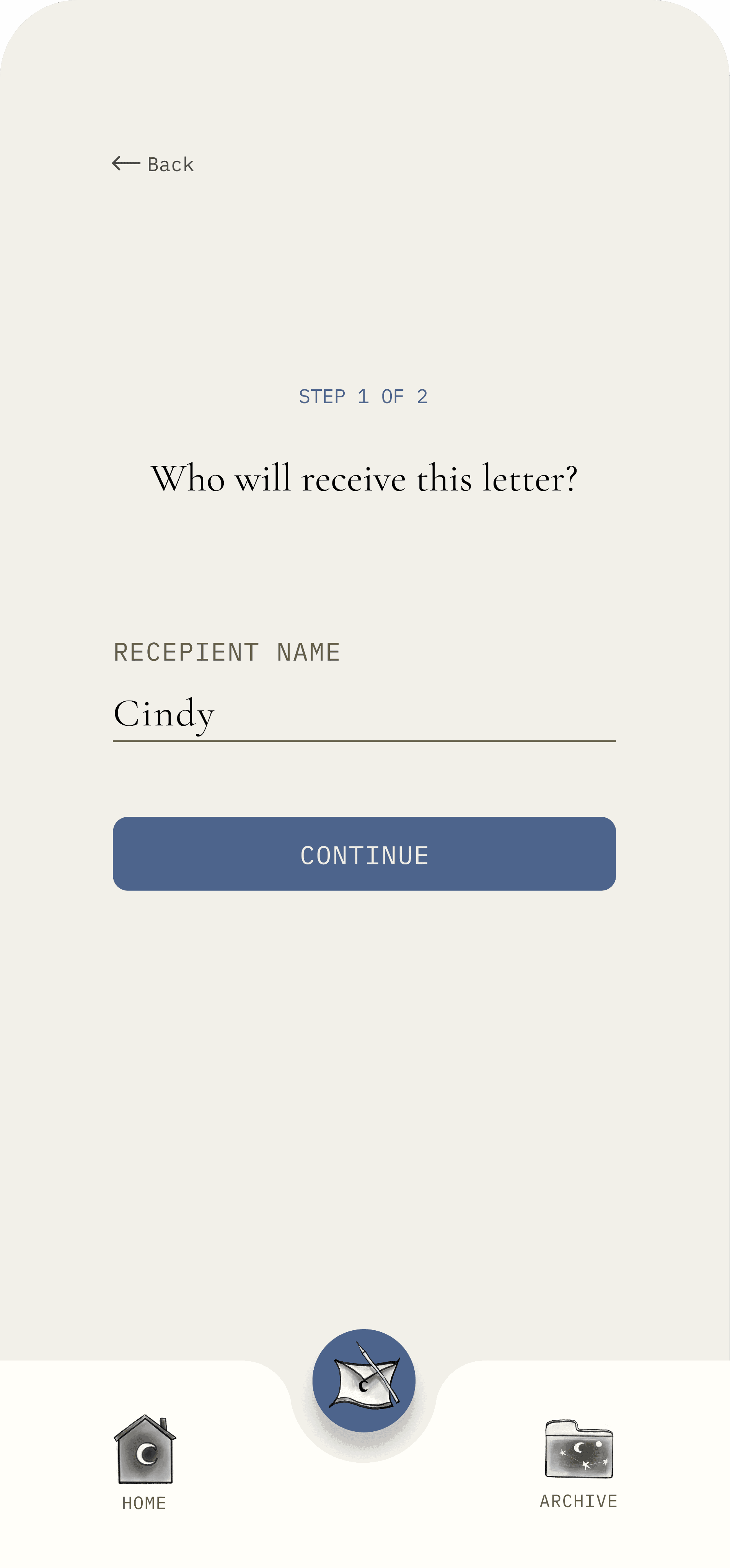
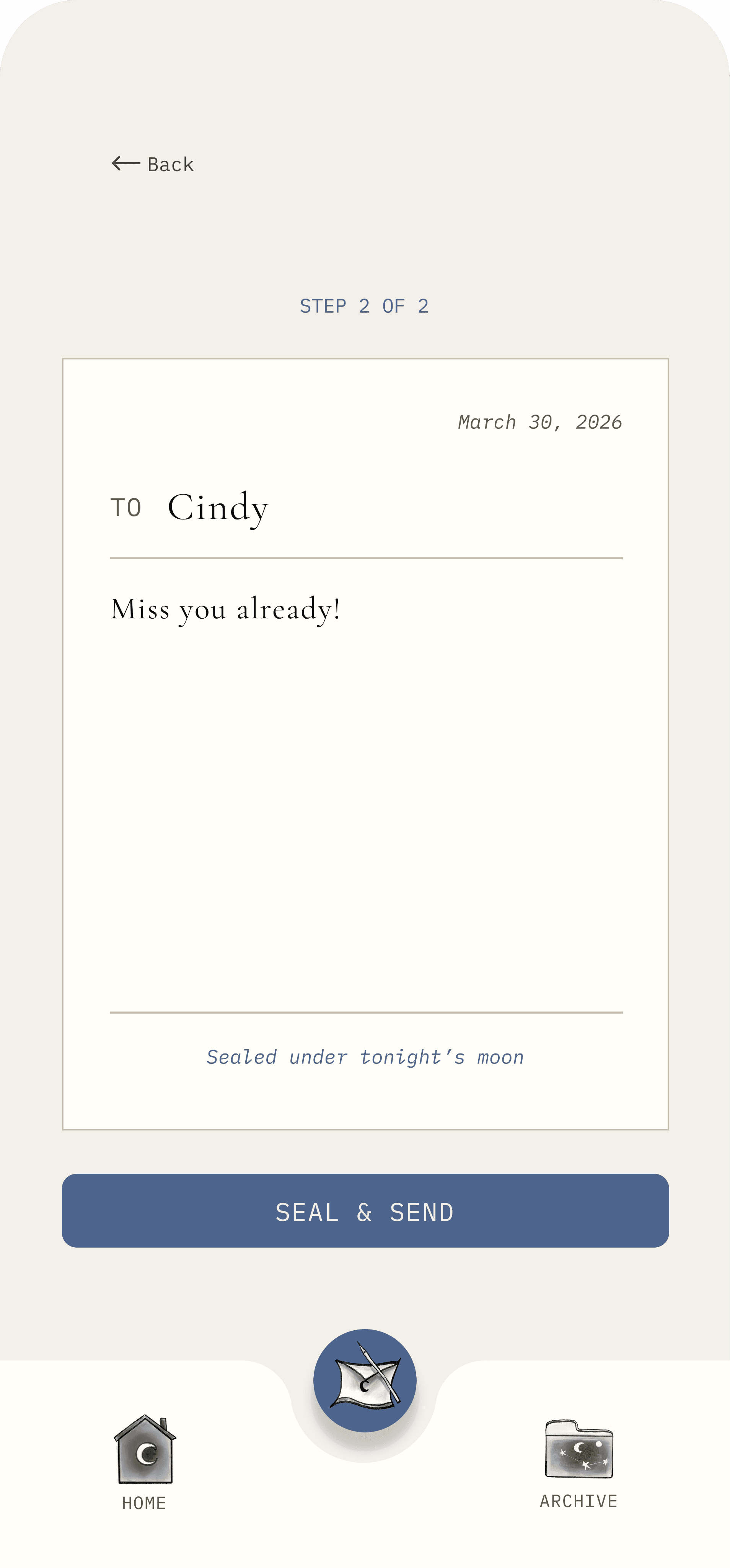
The Mooncode mobile app works together with the printer-lamp as the digital interface for the experience, allowing users to view the current moon phase, send and unlock messages by photographing the moon, and revisit archived exchanges over time. Through the app, one person can compose a message and seal it with the moon in their sky, while the other receives and unlocks it by capturing the moon from their own location. Paired with the physical printer, this system turns digital interaction into a tangible record, creating an experience where moon phases, messages, and saved archives become part of an ongoing ritual of connection.

mobile app

Future directions

As a next step, Mooncode could be developed into a more fully connected system that deepens both its technical reliability and its emotional ritual. Future iterations may refine moon recognition across different weather and lighting conditions, expand the app experience with richer archives and shared moon histories, and further integrate the printer-lamp so that each exchange feels even more seamless and atmospheric. We also see potential to explore how the system might support longer-term relationships through accumulating lunar records over time, turning everyday communication into an evolving archive of shared memory, place, and celestial rhythm.

BBAACCKK  TTOO  WWOORRKKSS