ReStitch
YEAR
2024
CONTEXT
KEYWORDS
AR Interaction
Exhibition Design
ROLE
Interaction Designer
Design
Figma, Blender
Systems
Development
Lens Studio
Project Overview
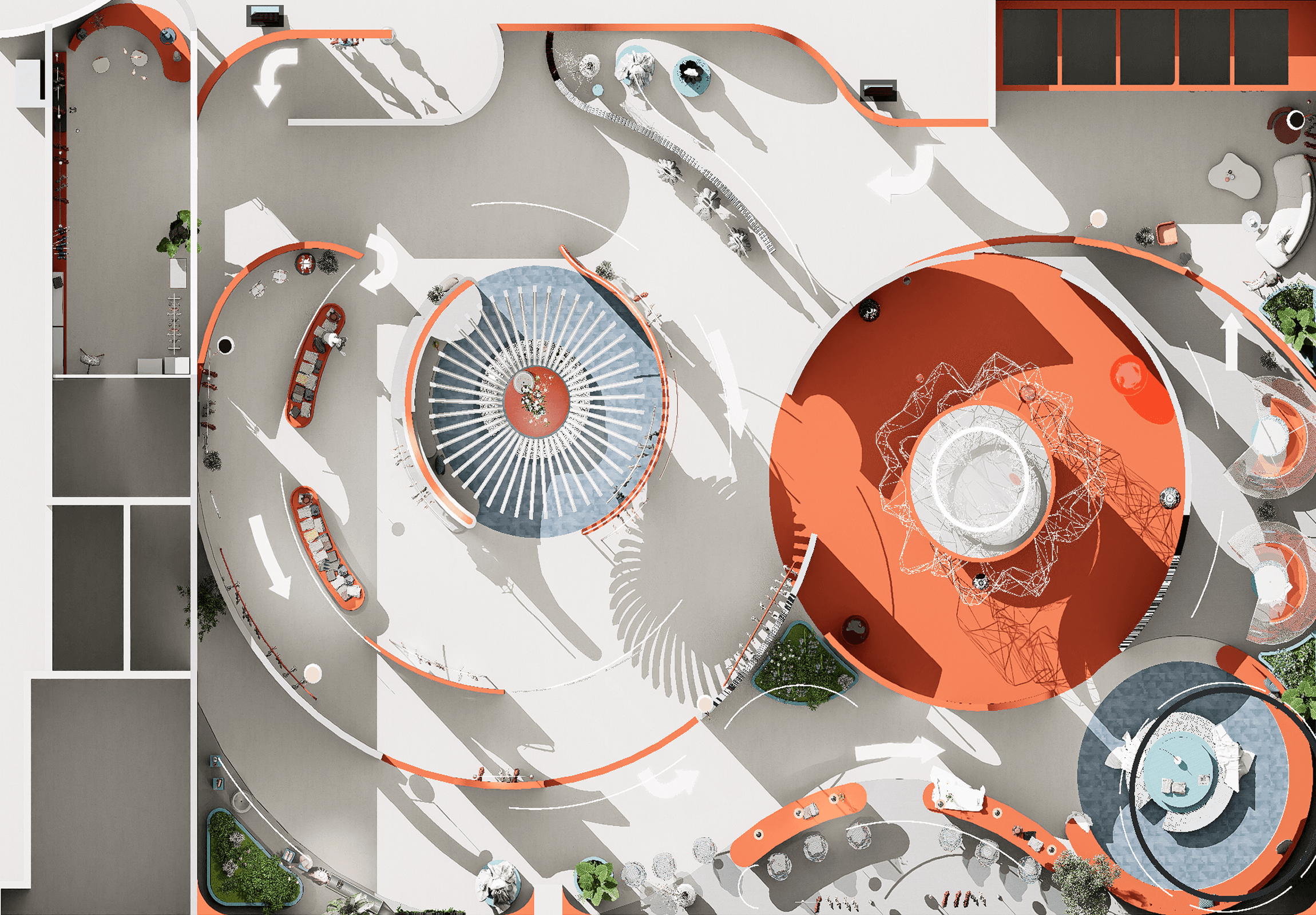
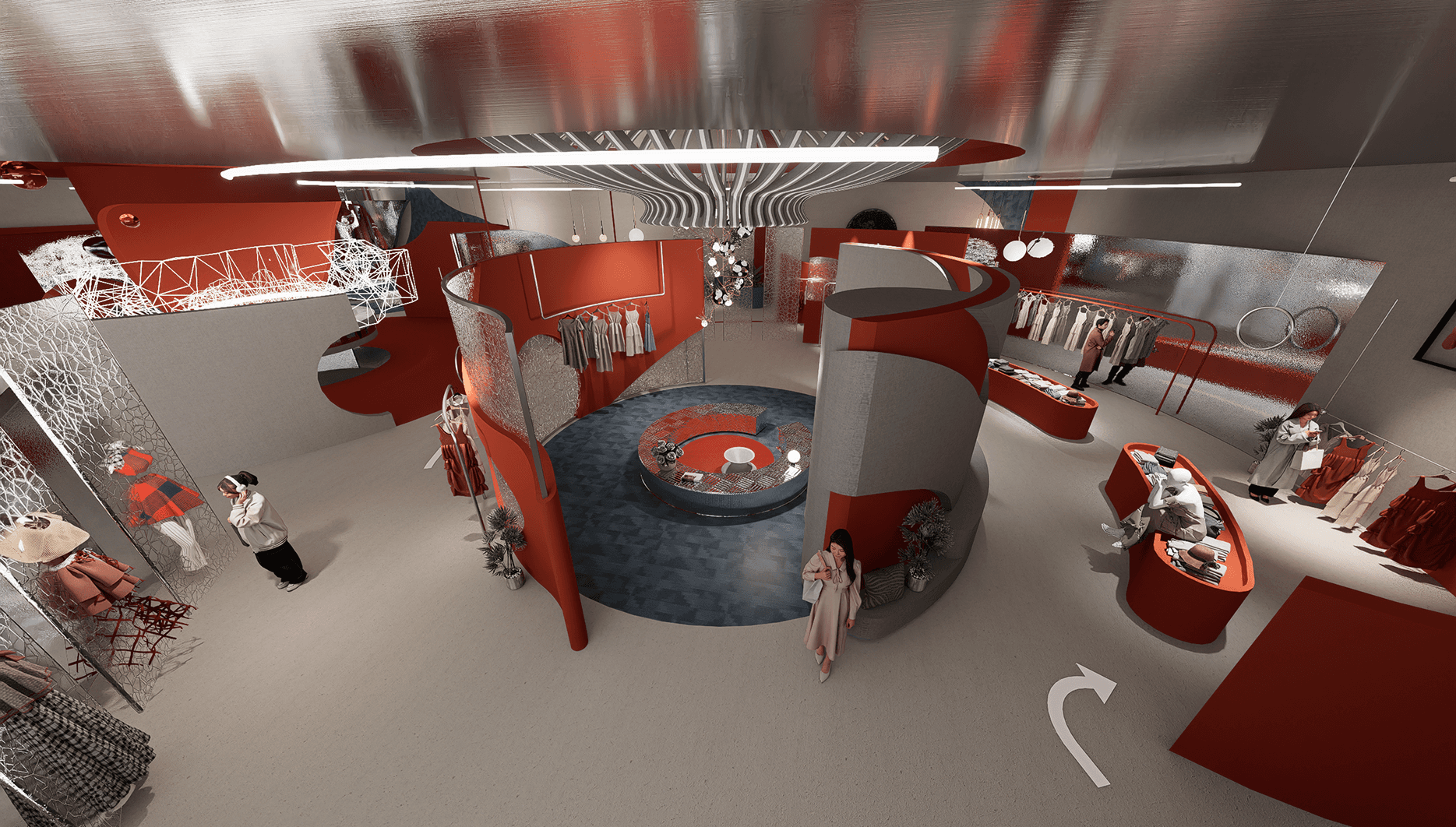
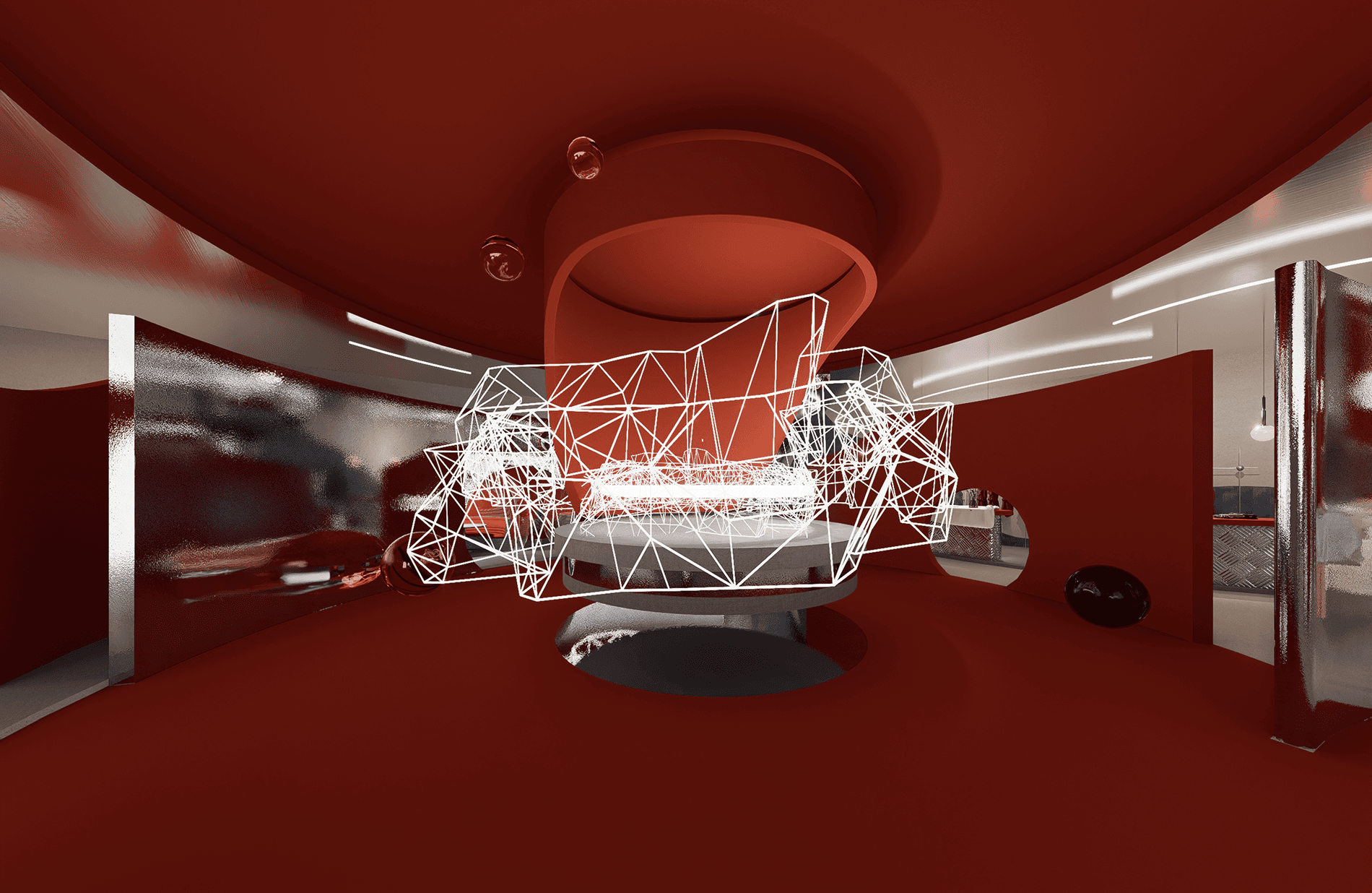
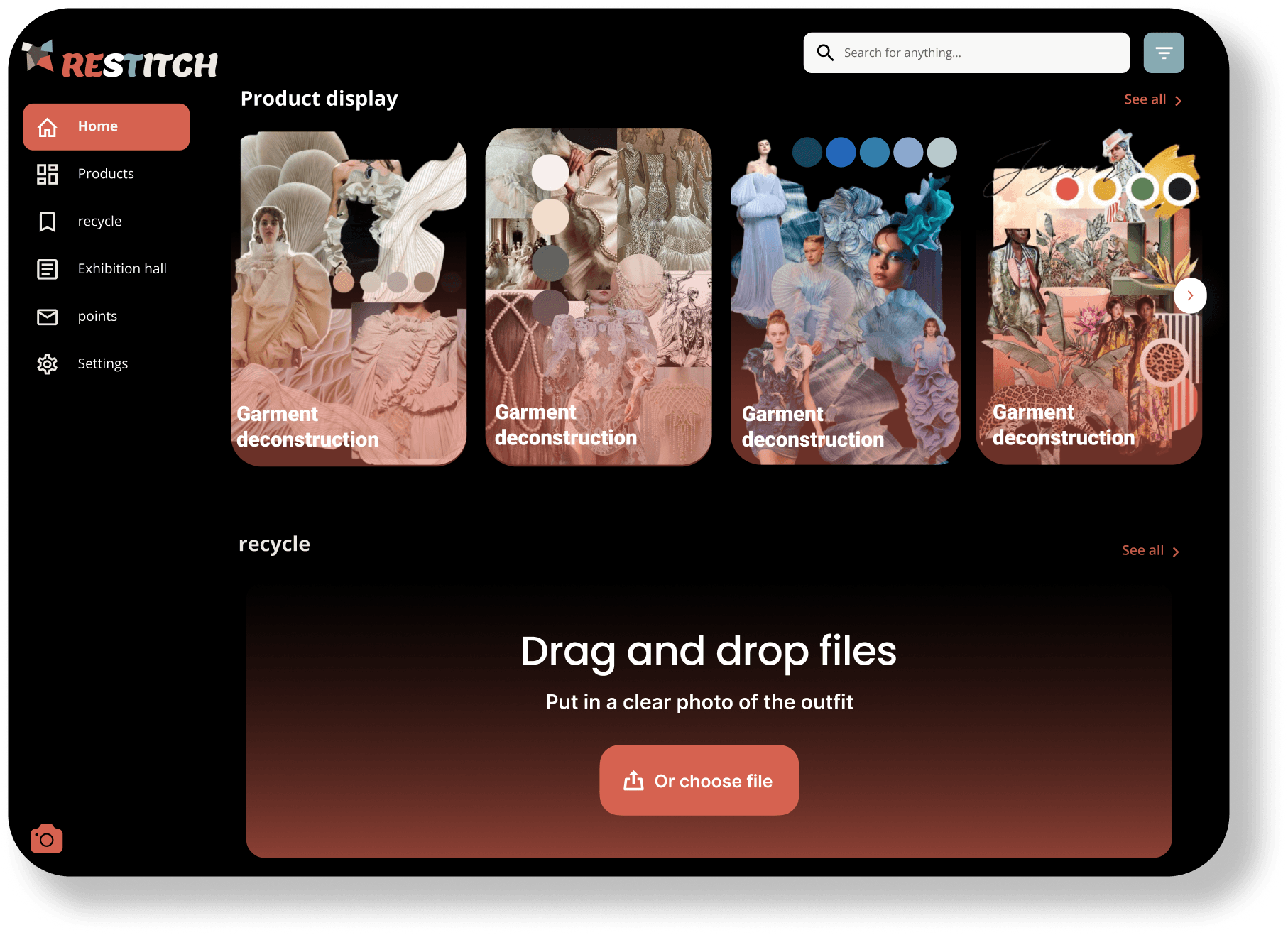
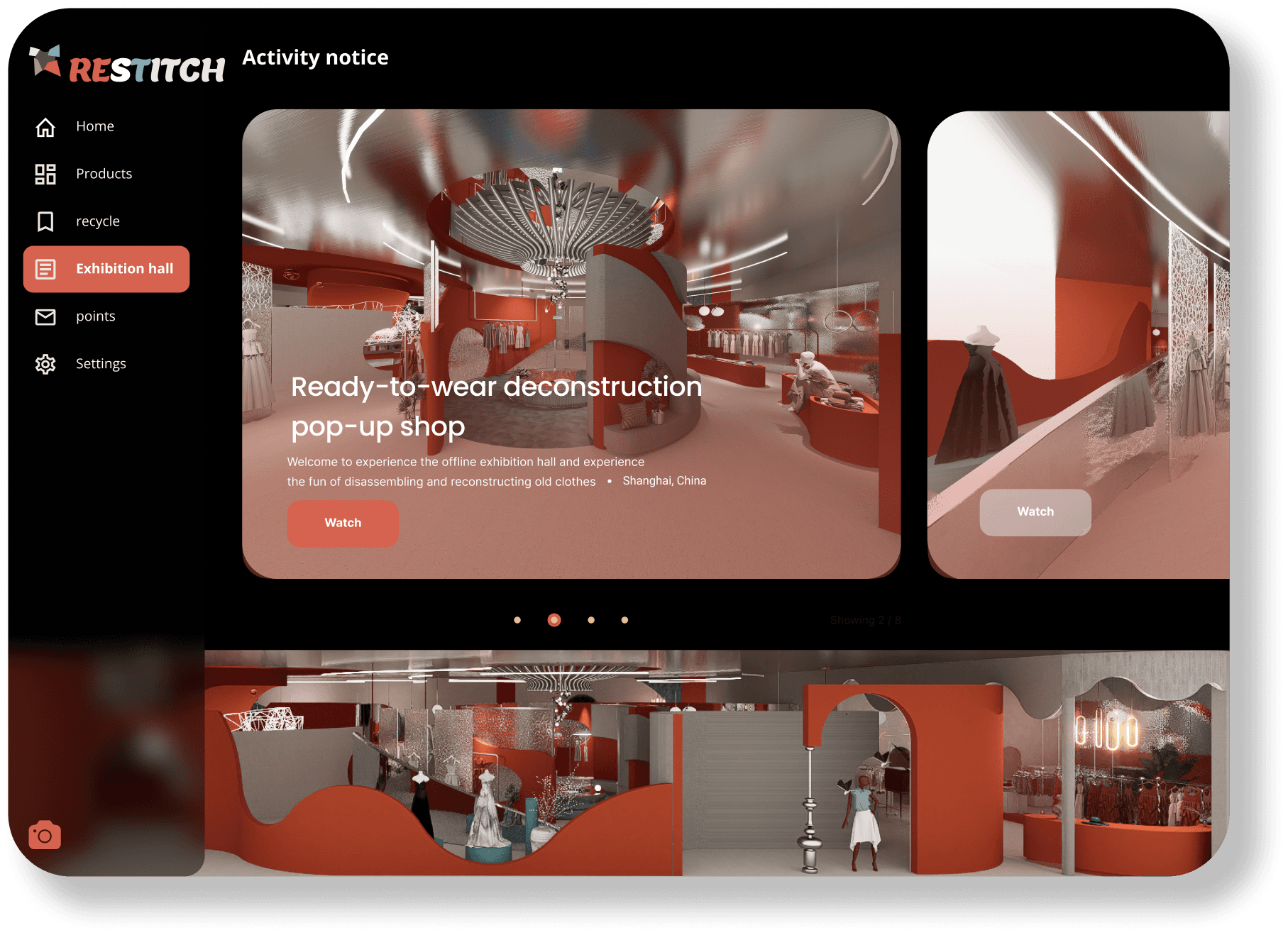
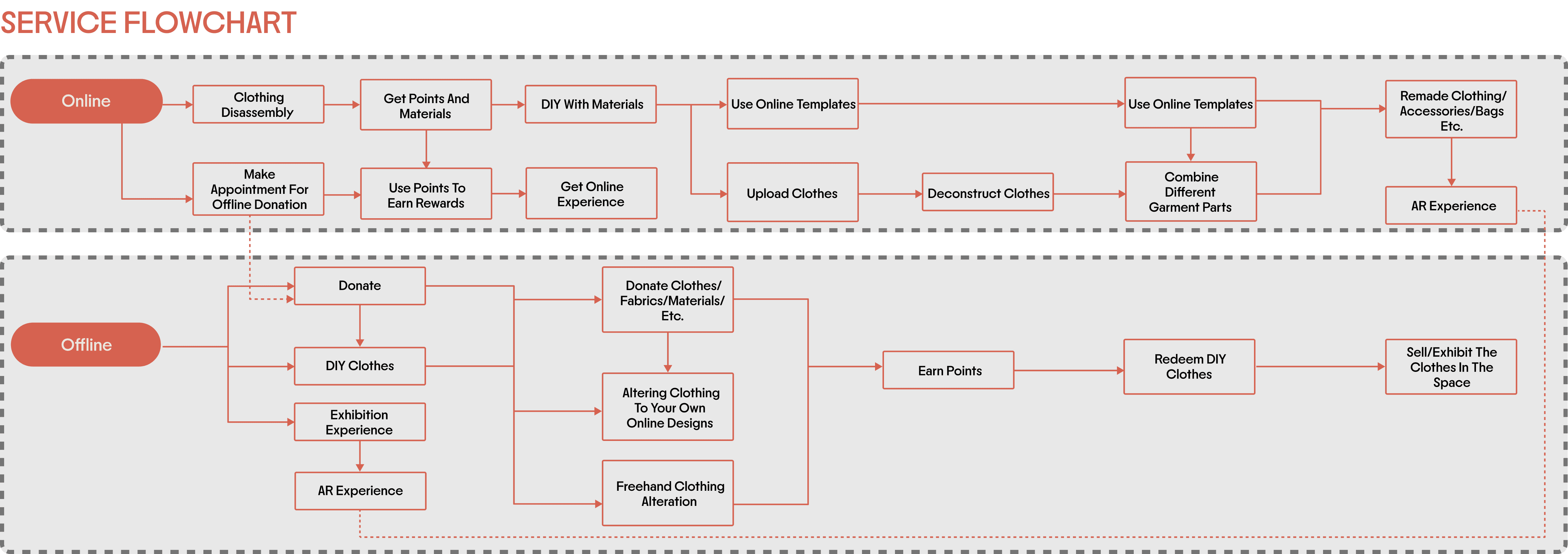
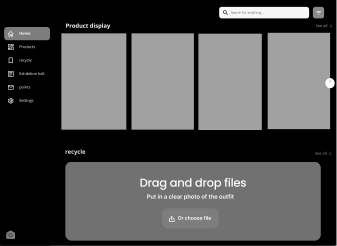
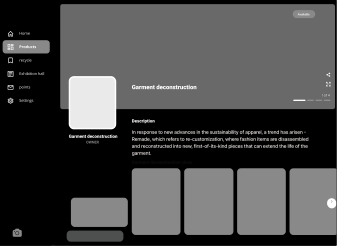
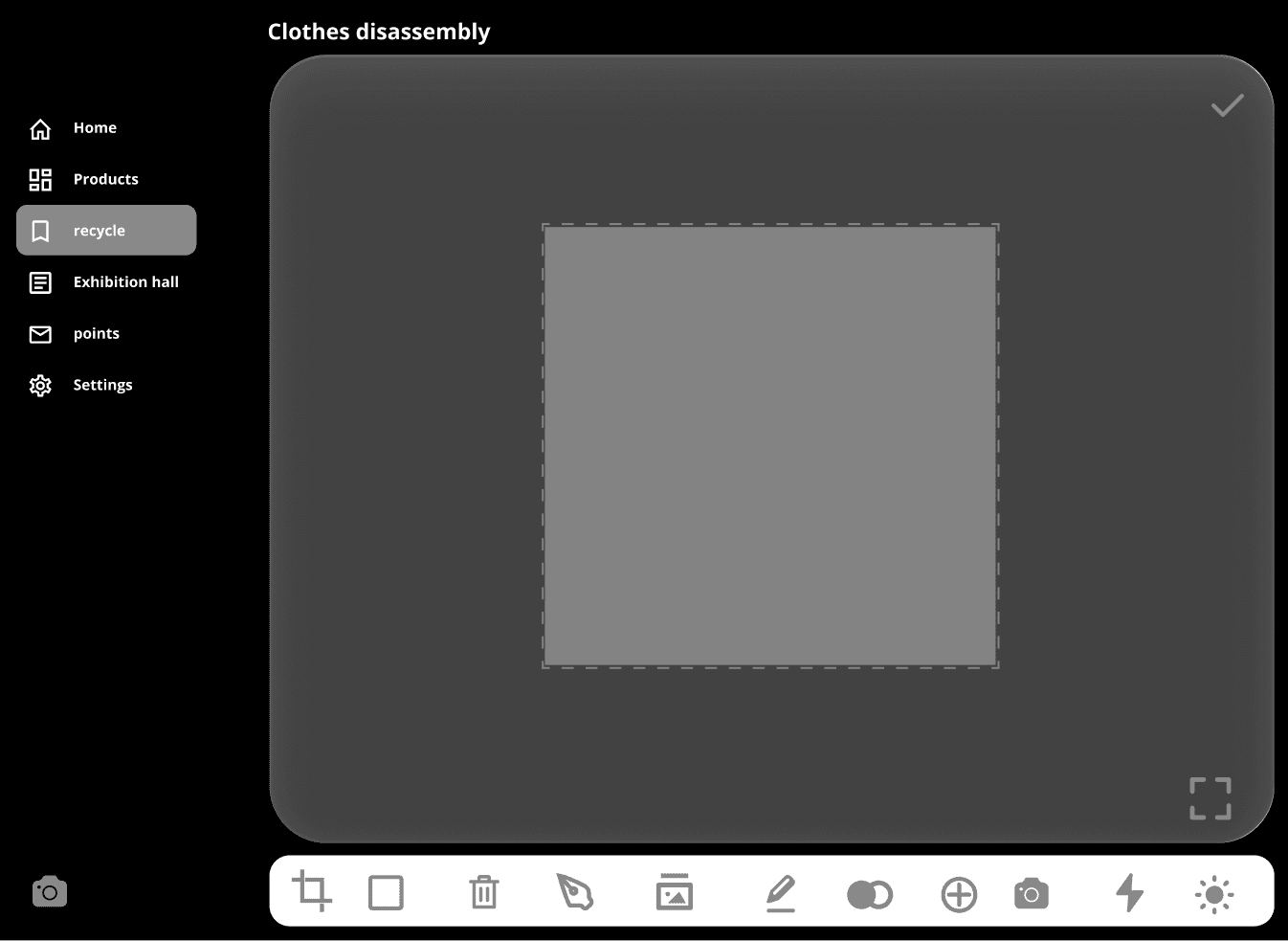
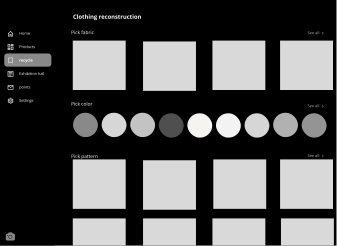
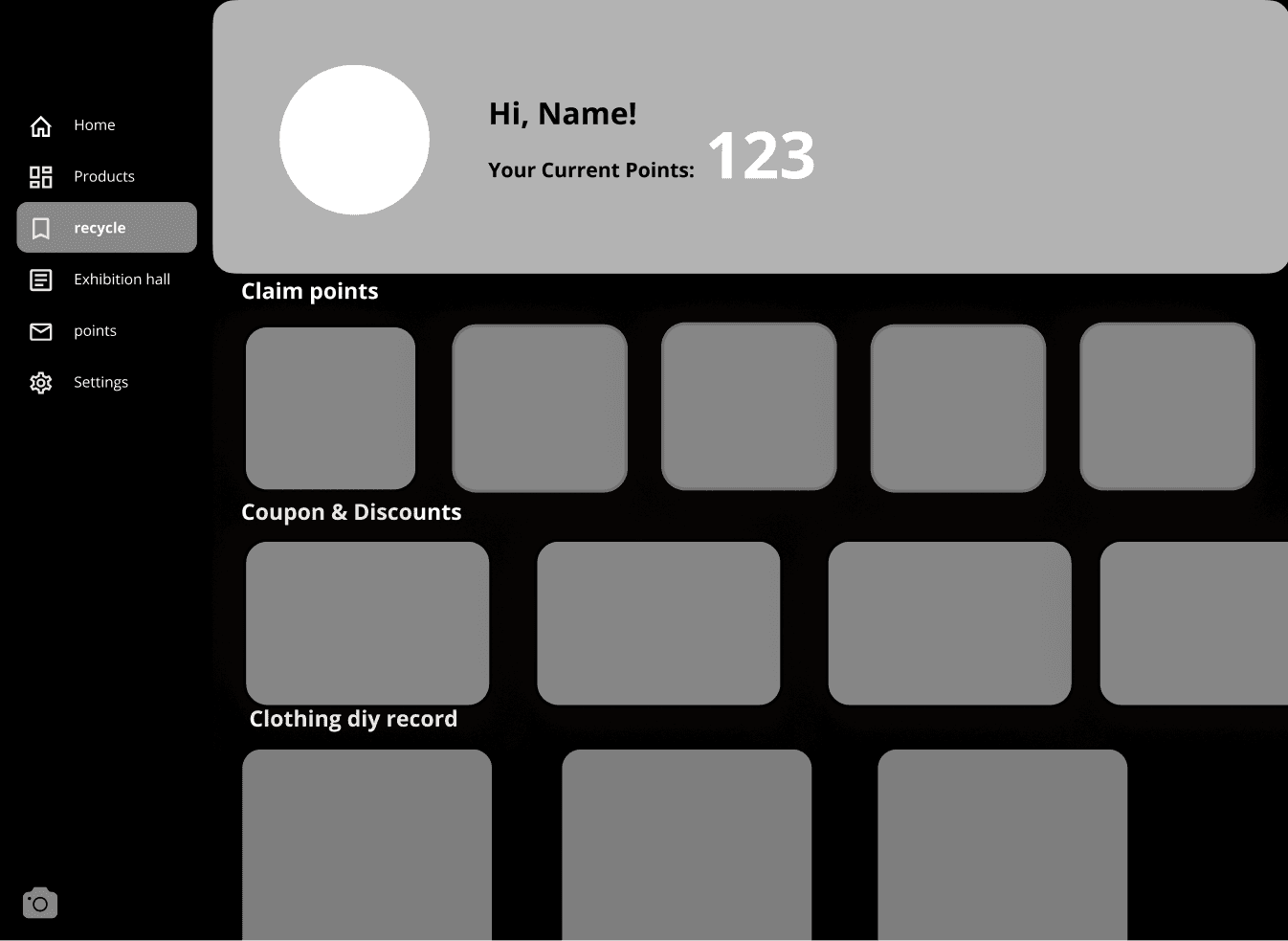
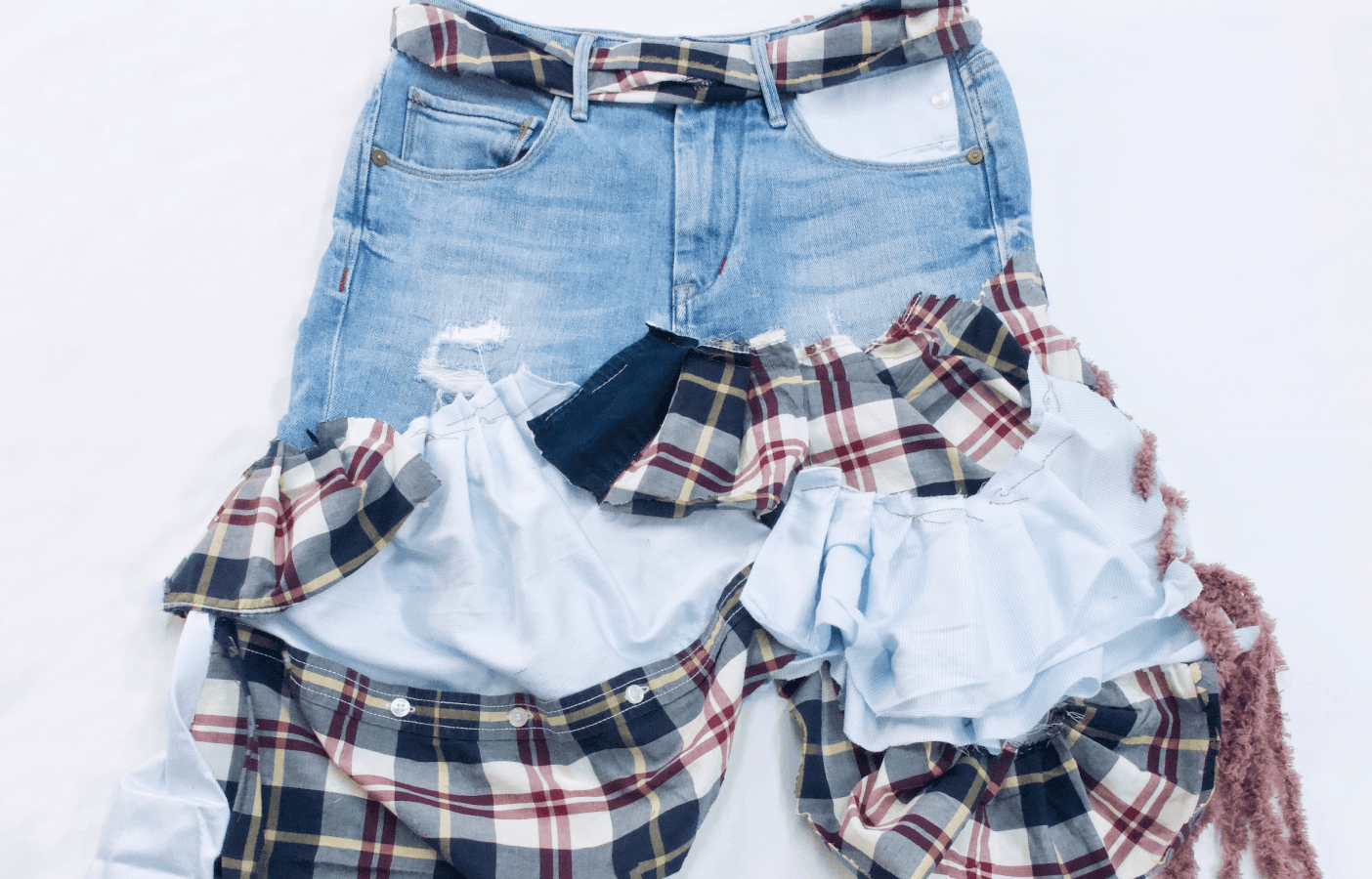
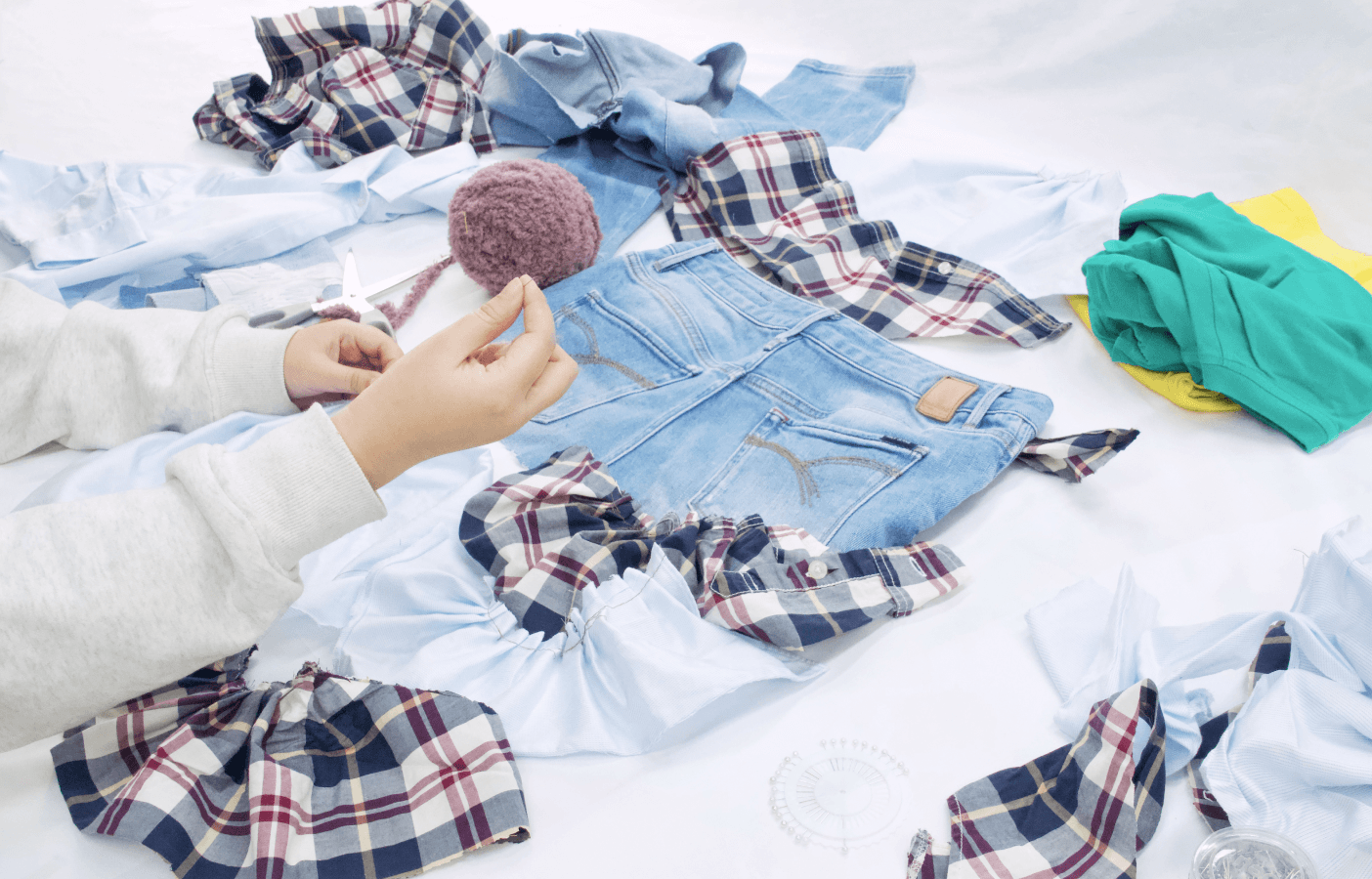
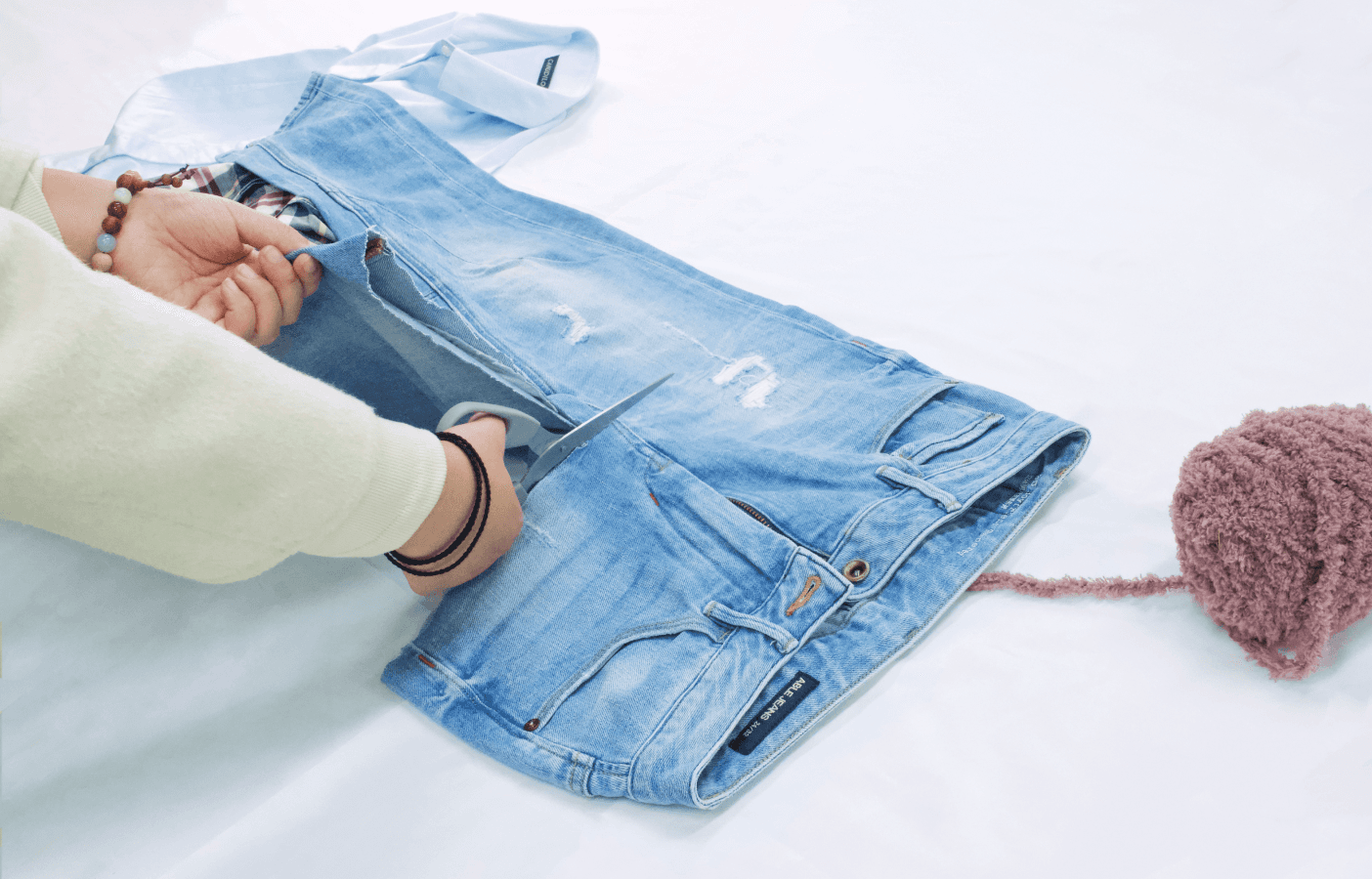
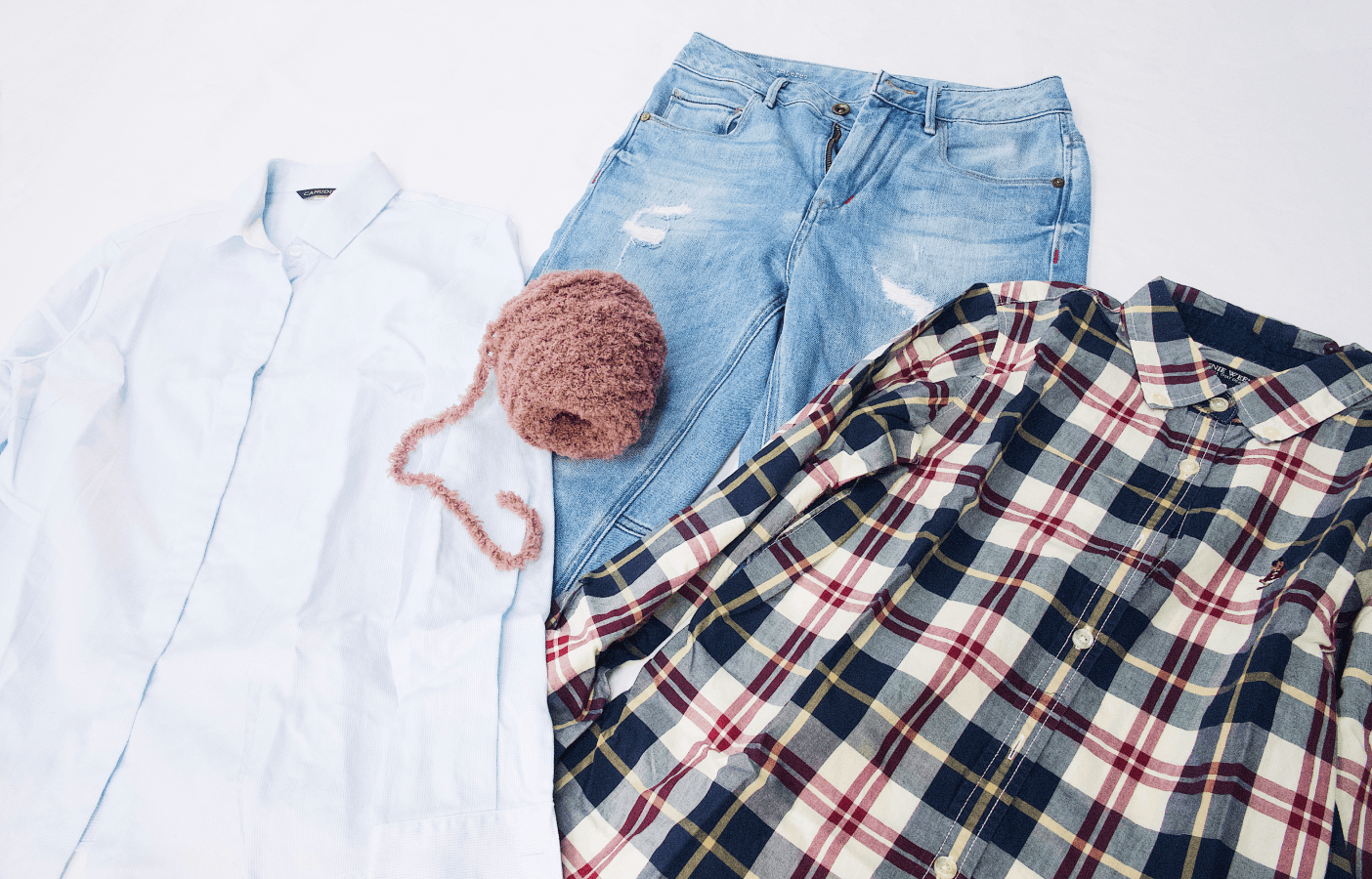
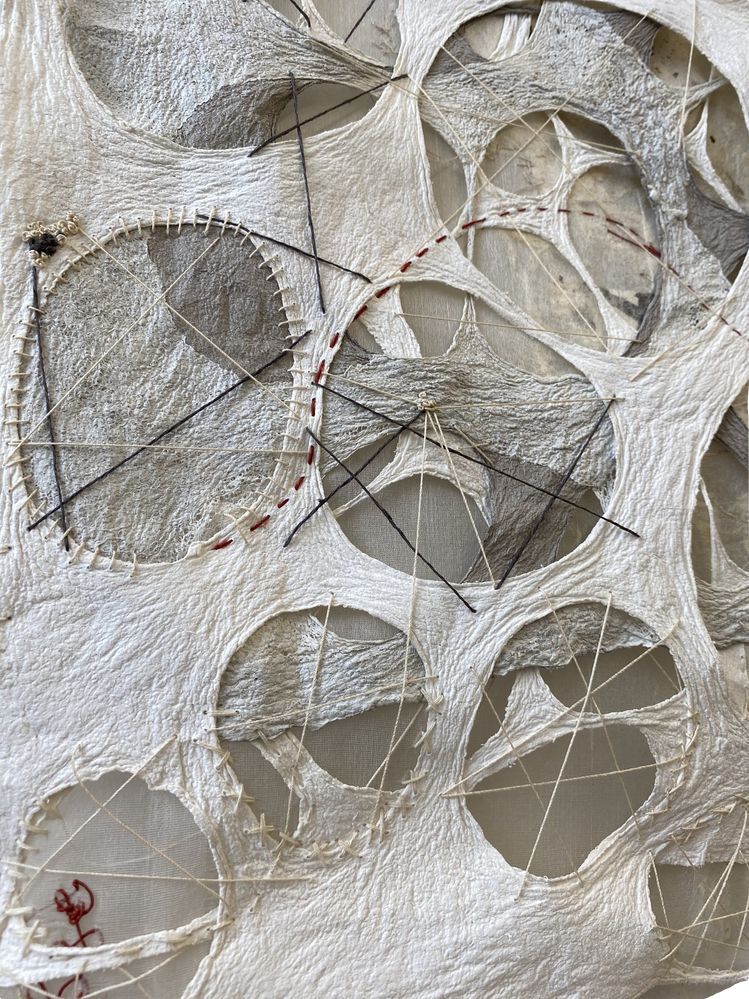
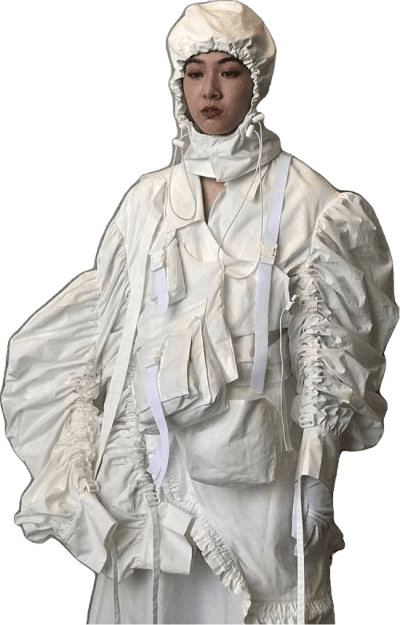
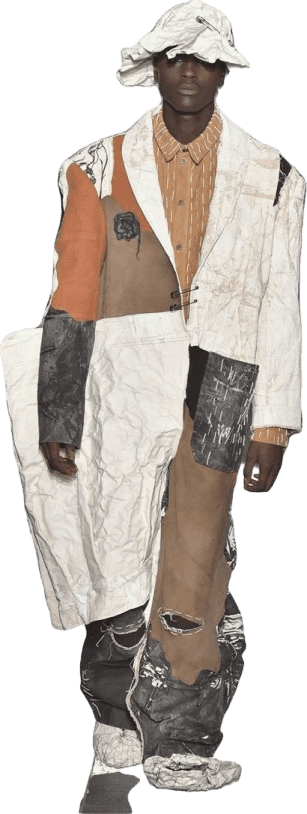
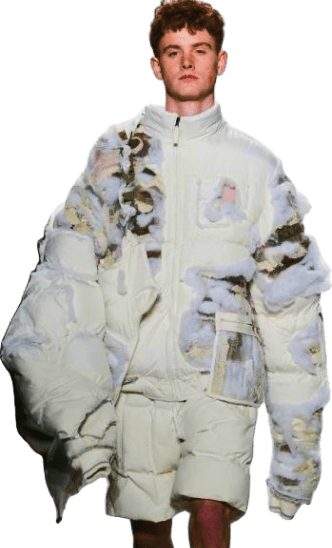
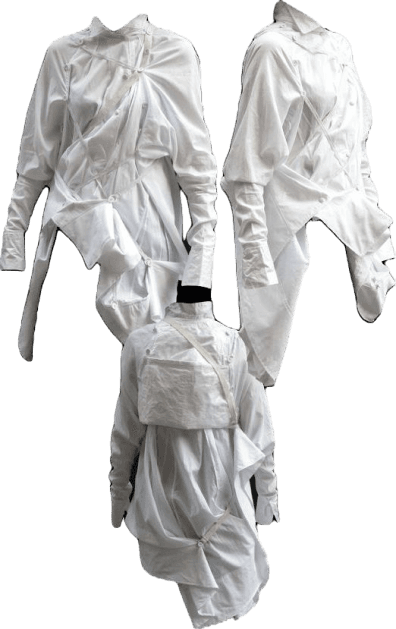
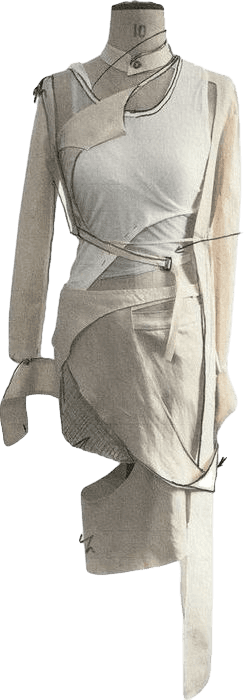
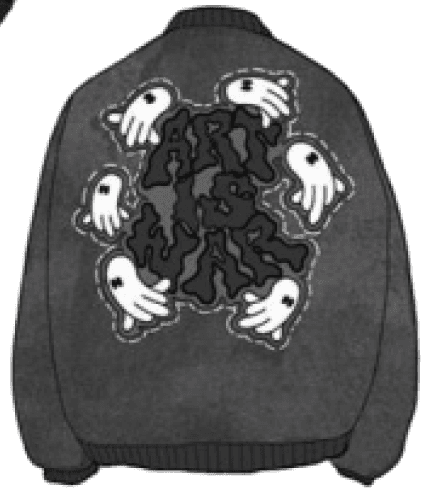
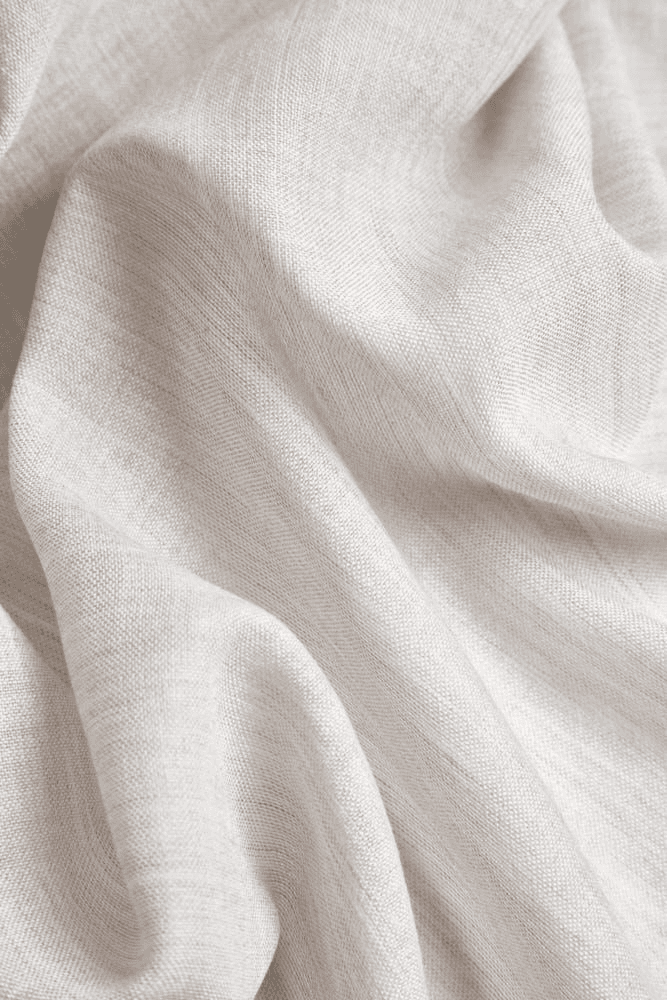
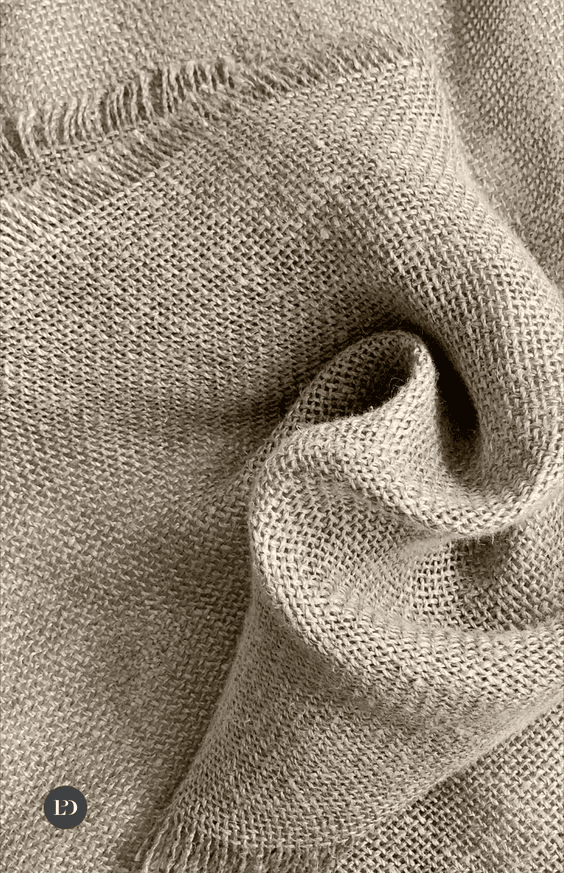
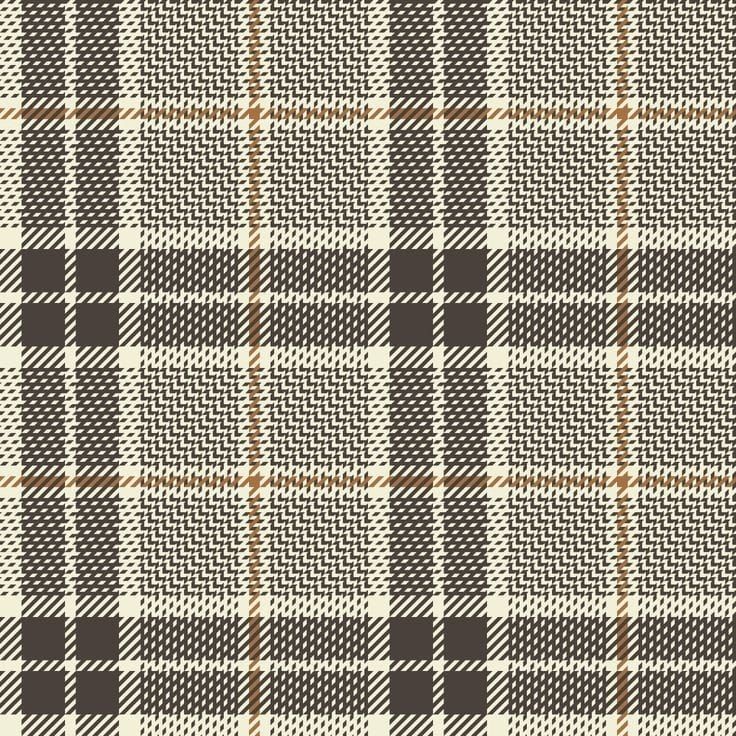
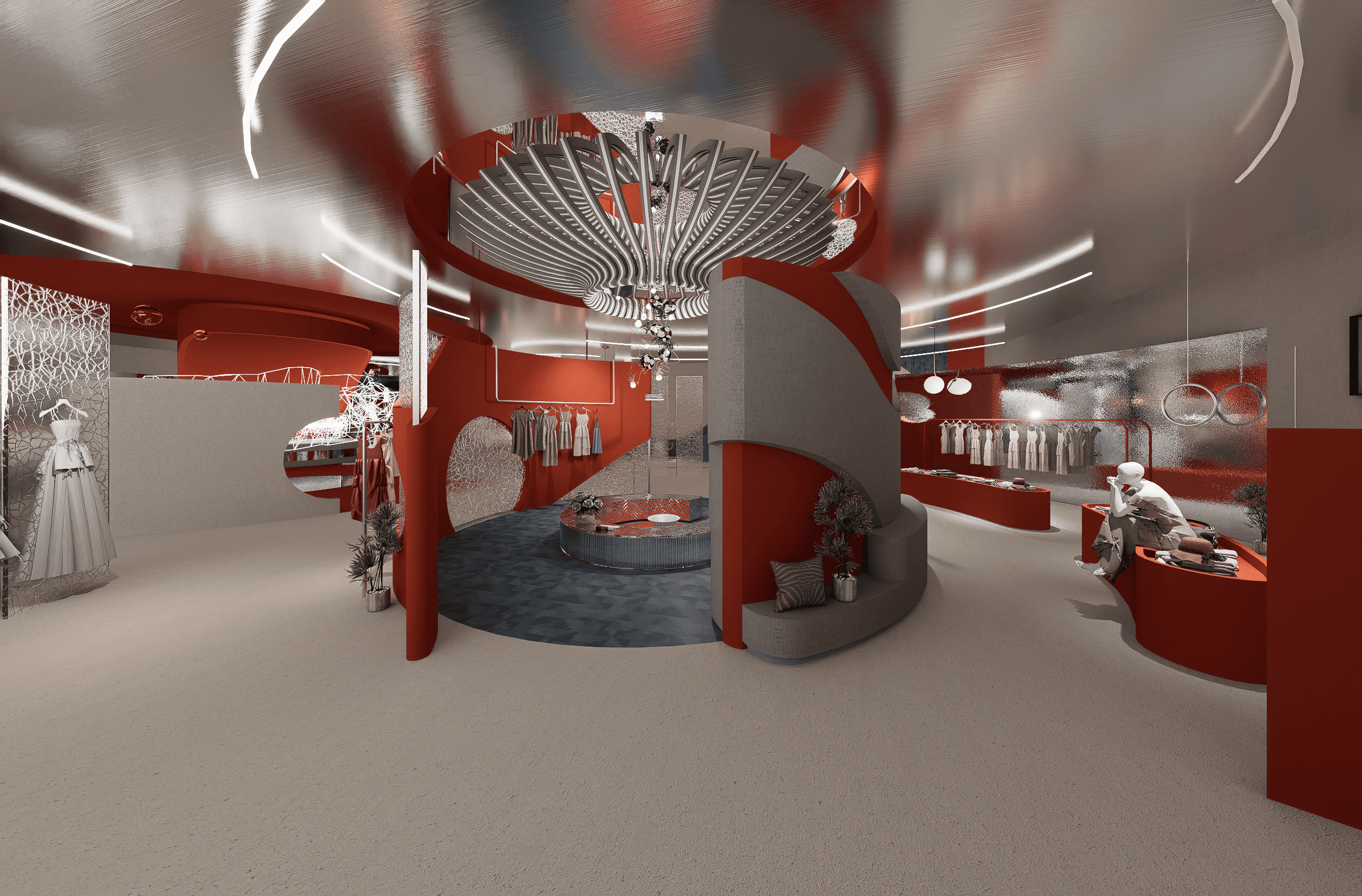
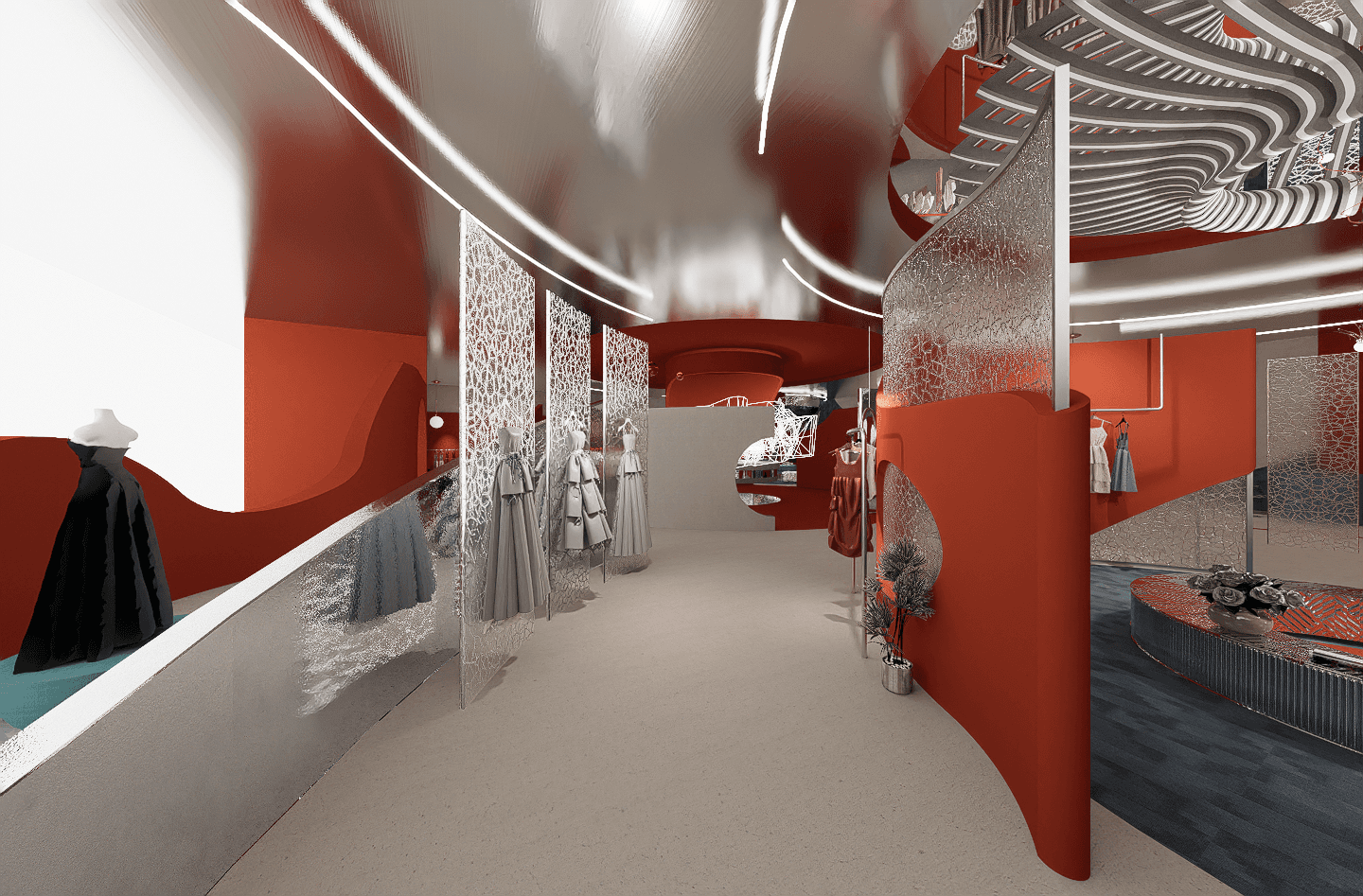
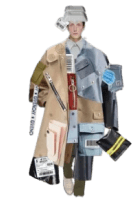
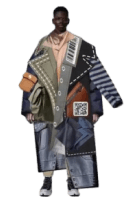
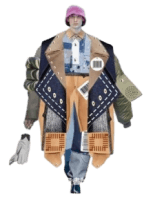
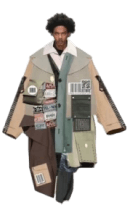
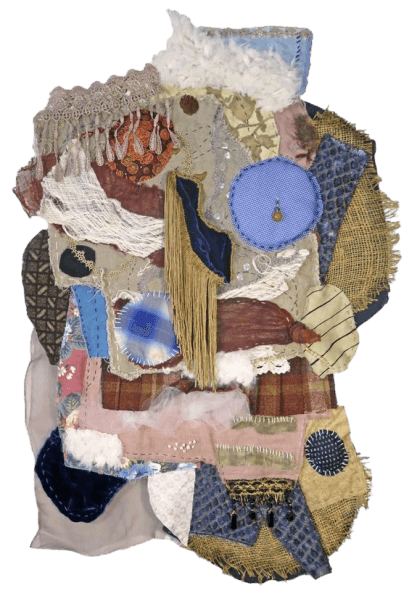
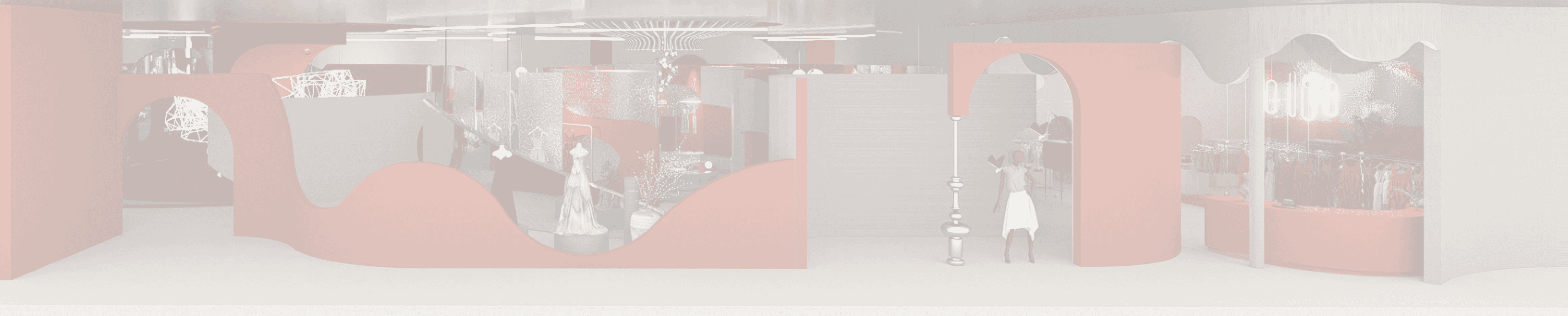
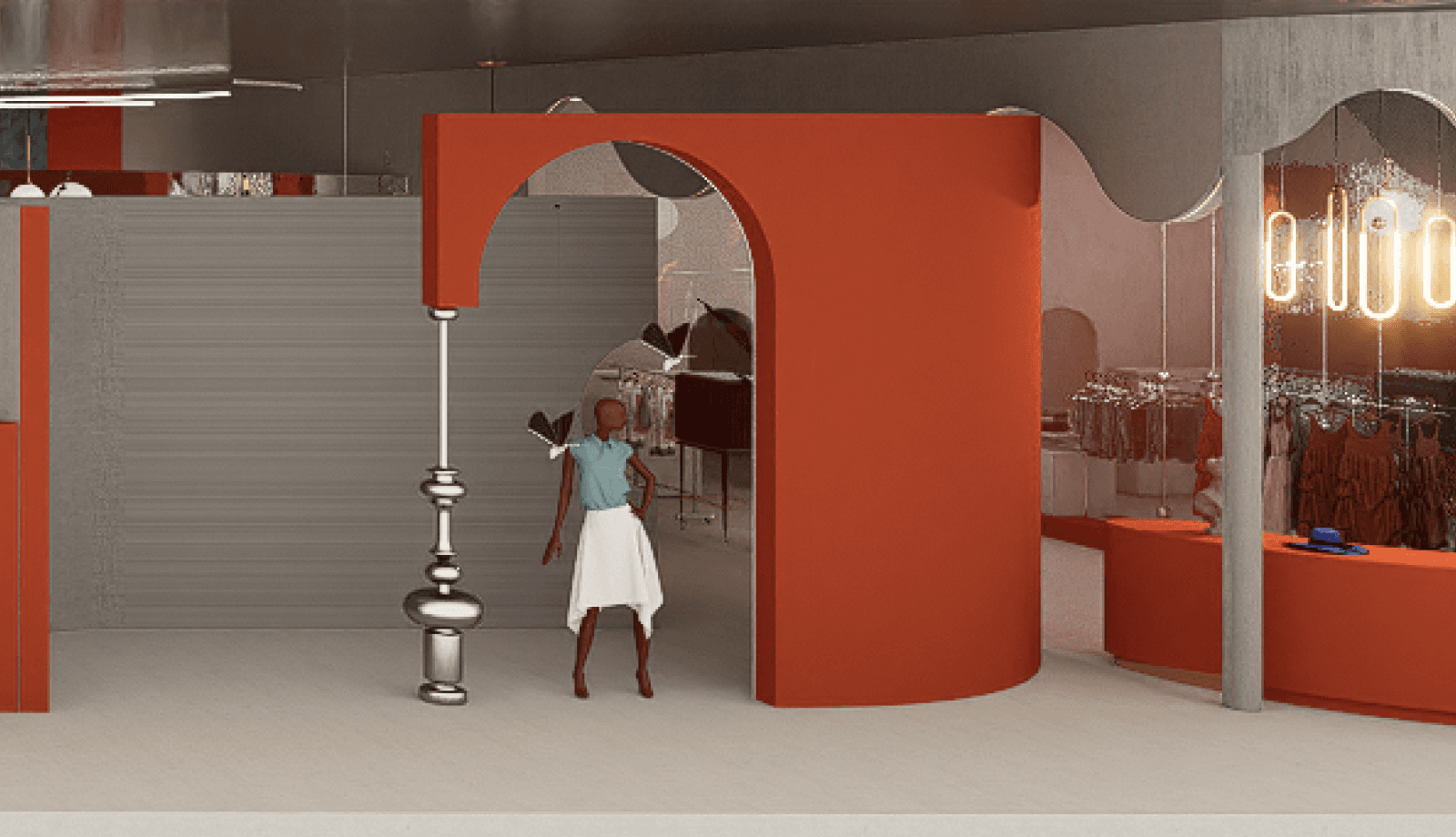
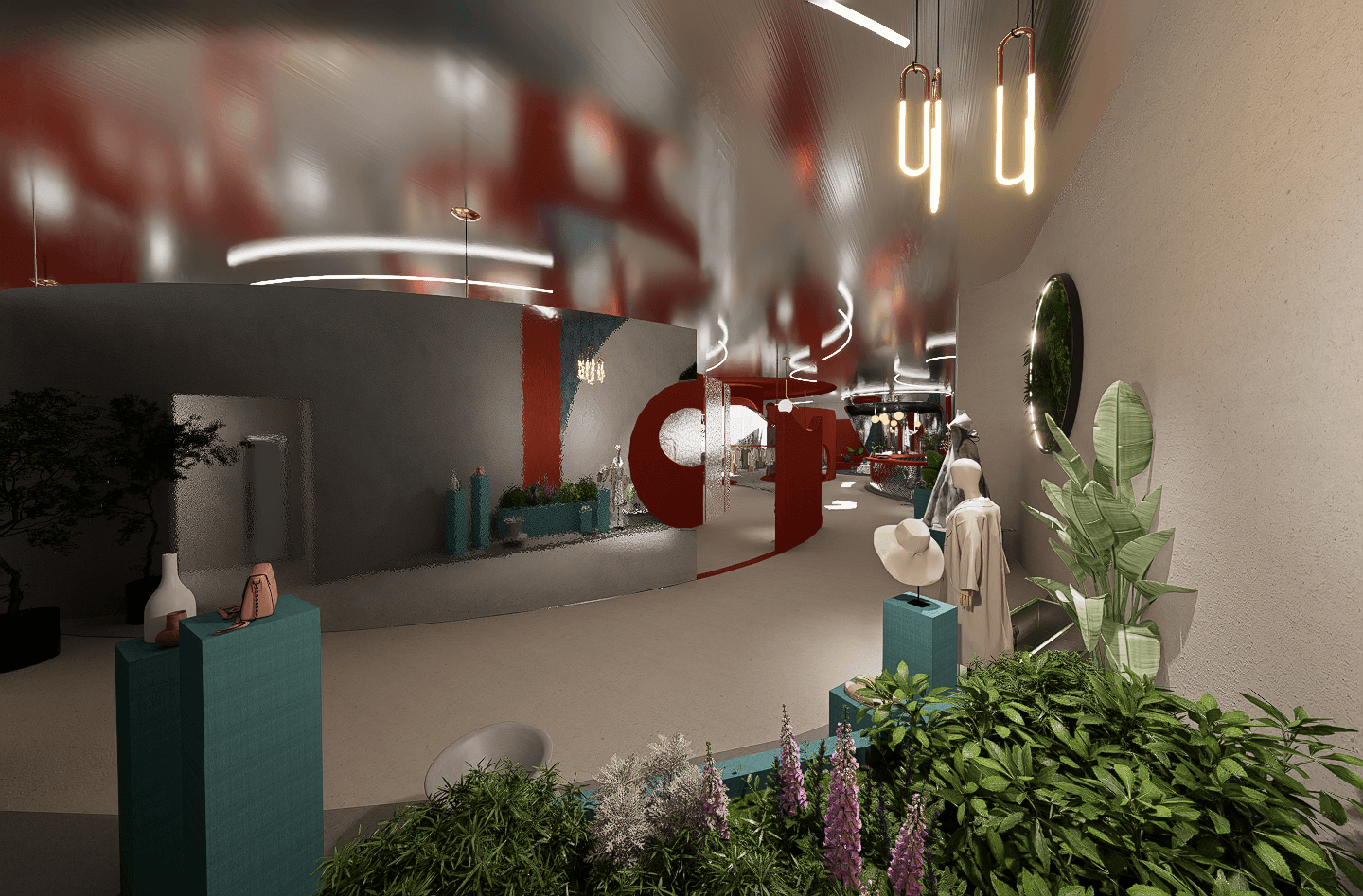
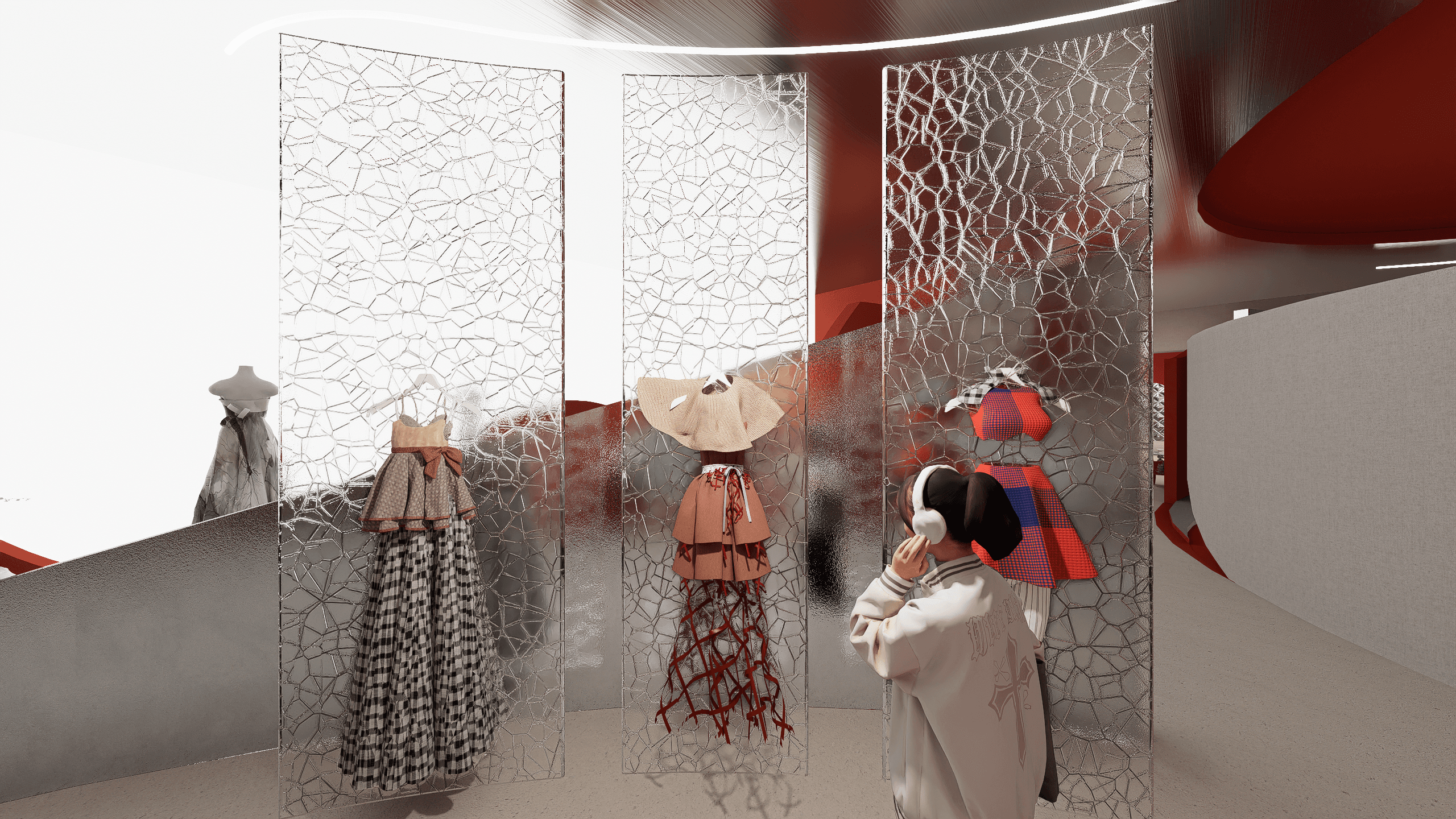
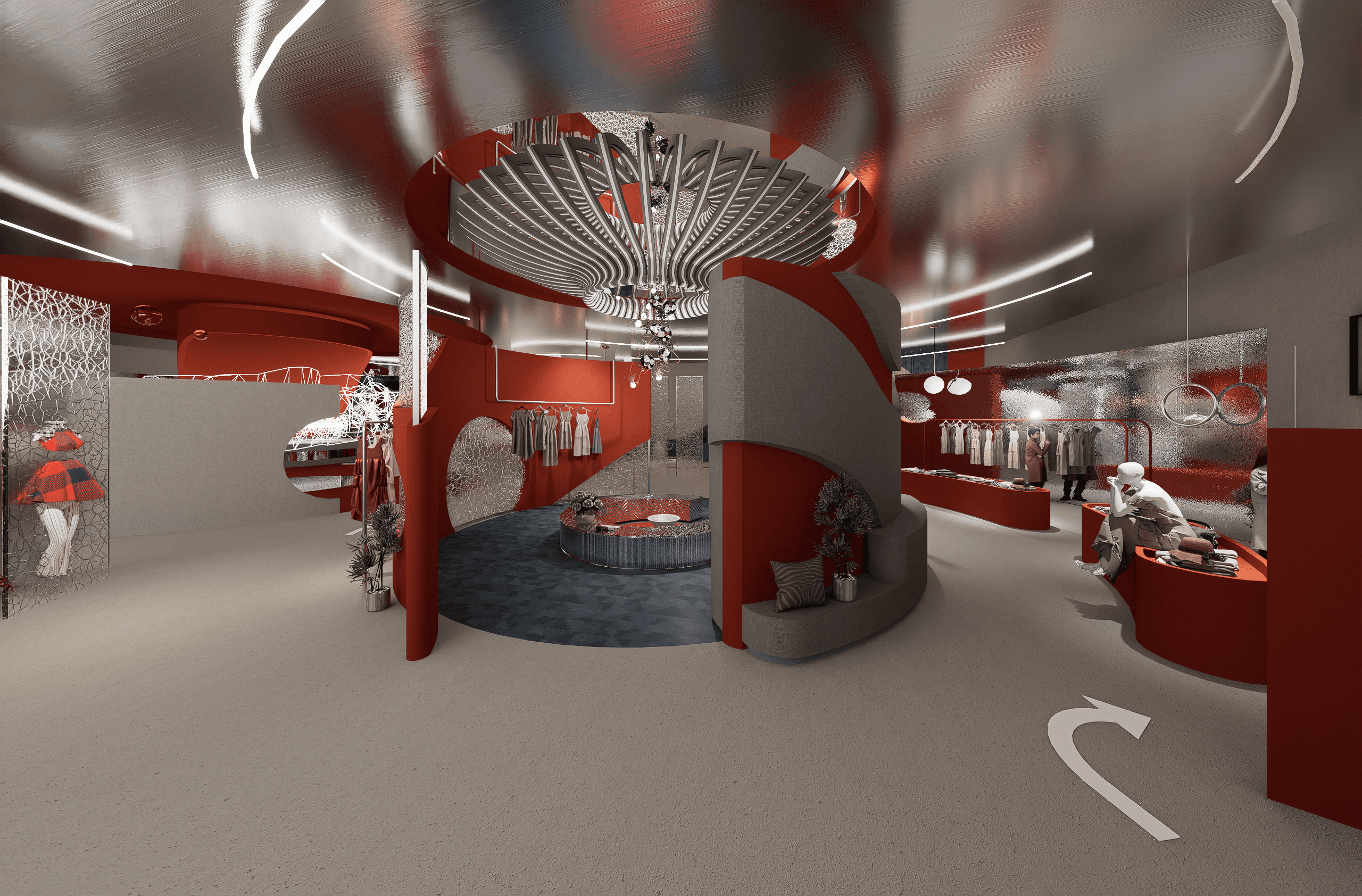
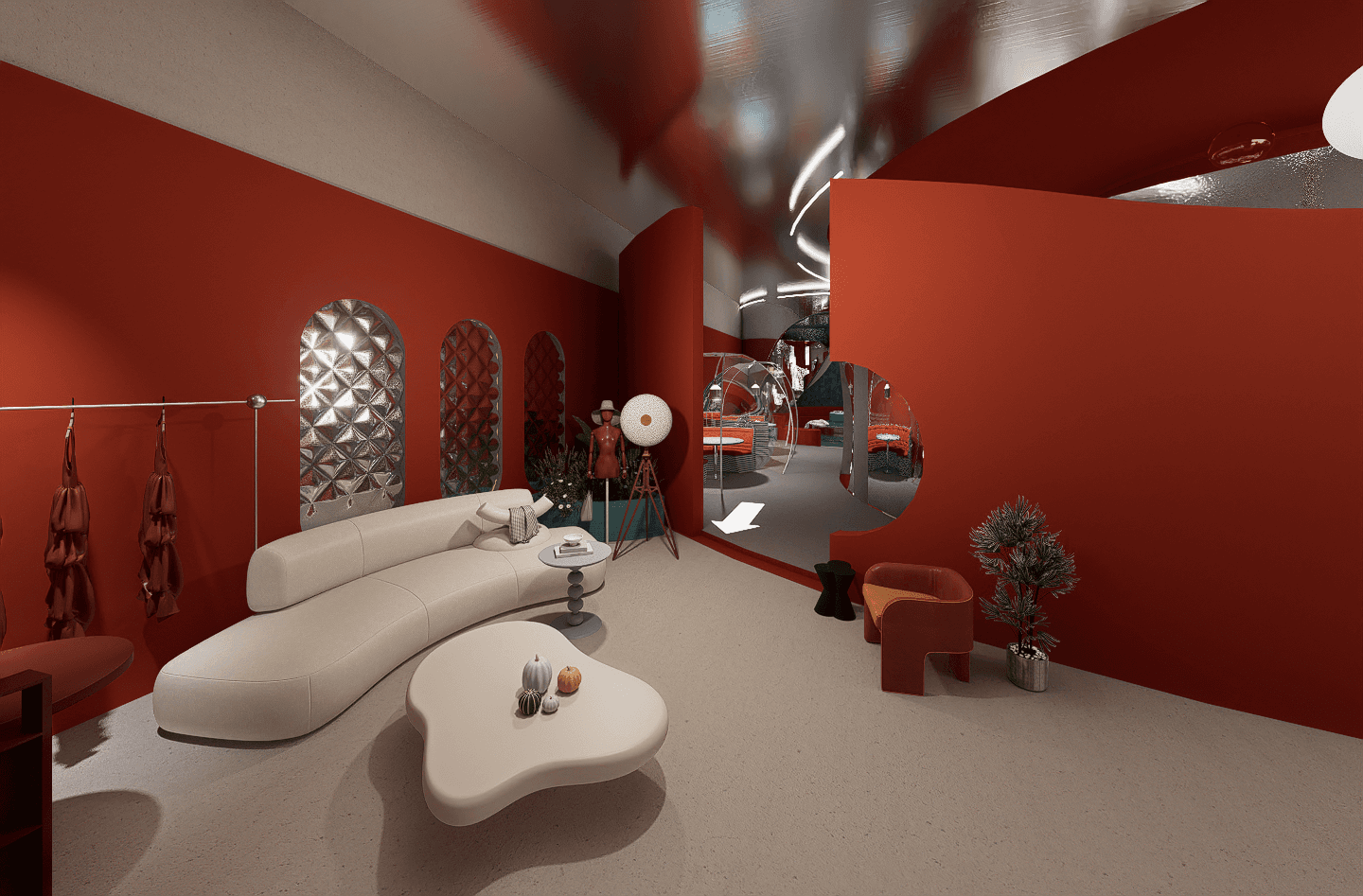
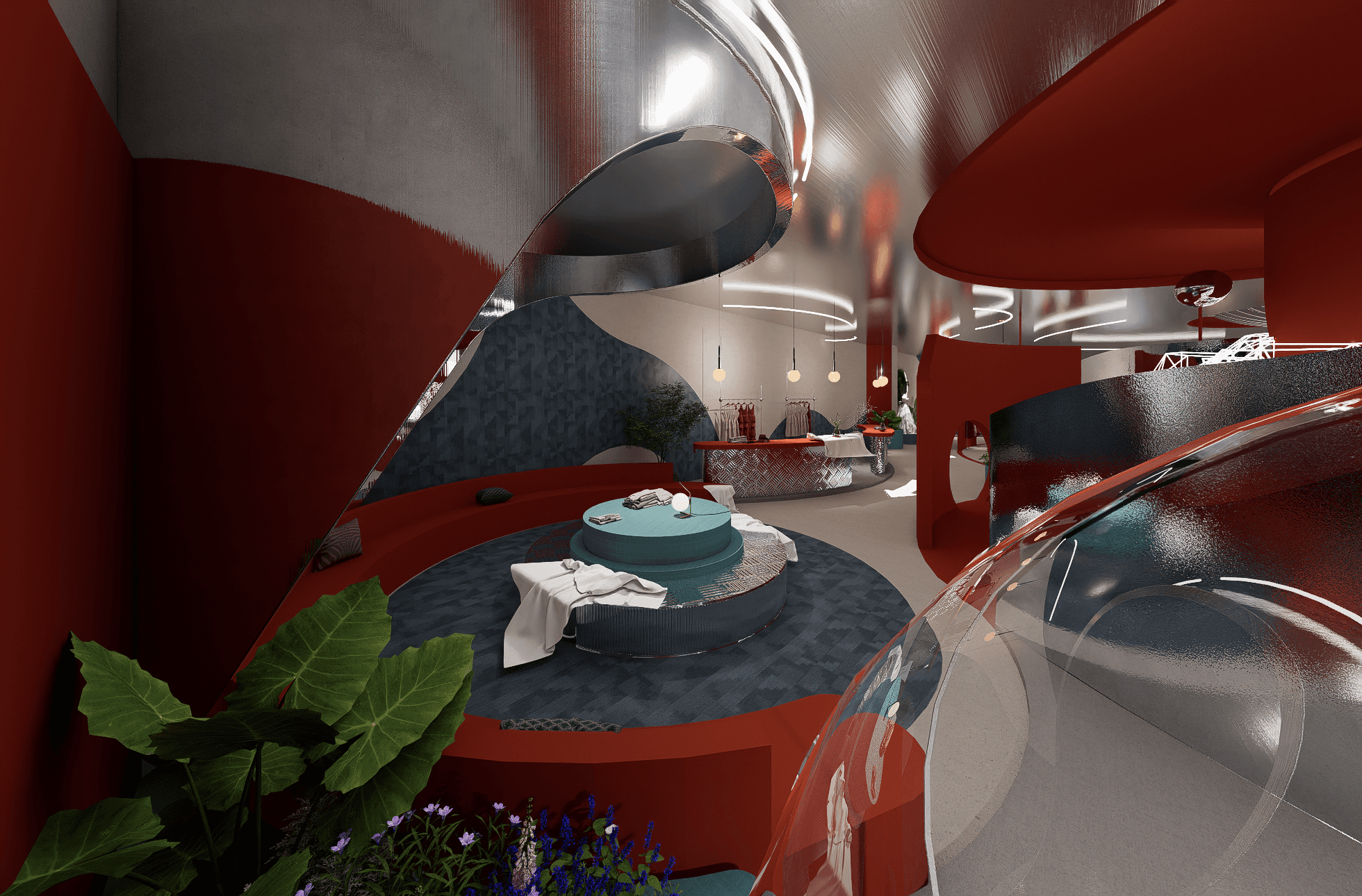
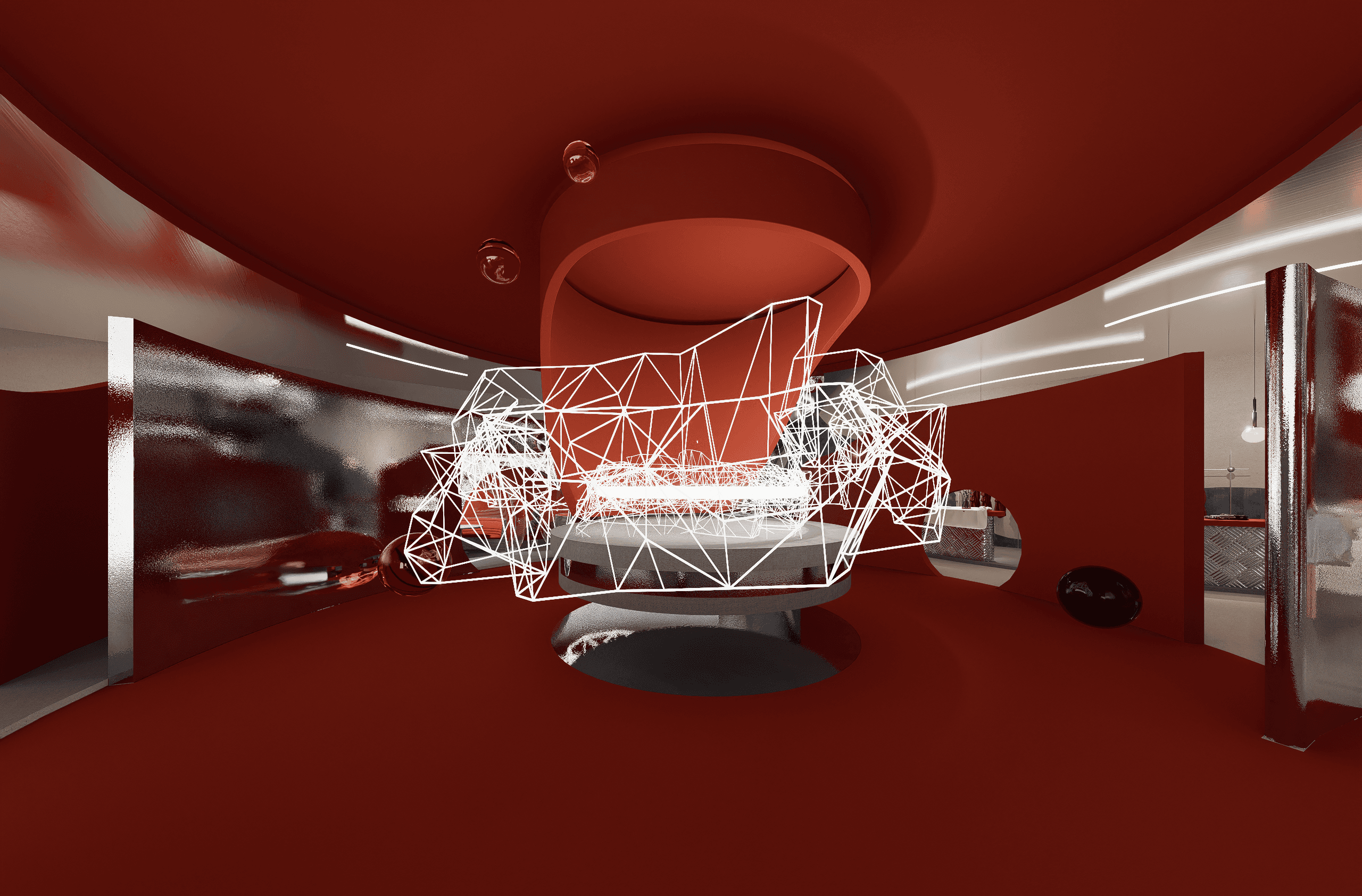
ReStitch is a speculative fashion service that combines a website, AR try-on experience, and offline pop-up exhibition to encourage people to extend the life of clothing through reuse, deconstruction, and DIY remaking. It creates a playful and hands-on experience to invite users to engage with upcycled fashion in a more creative and accessible way.
Problem
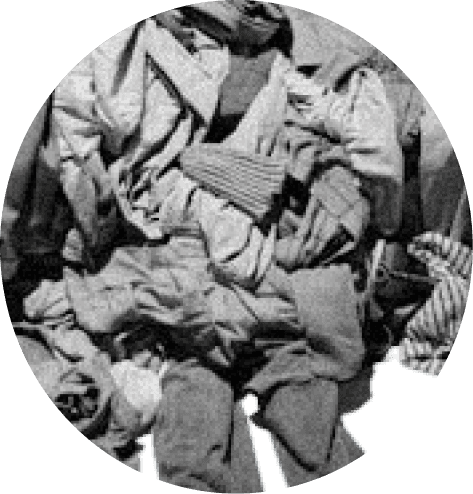
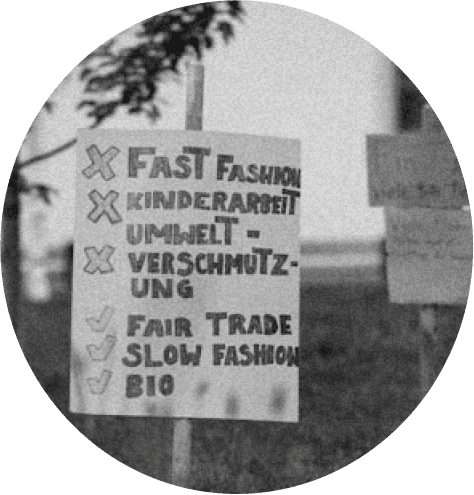
Fast fashion is driven by low prices, trend culture, and consumerism, encouraging people to buy more while paying less attention to quality, sustainability, and the afterlife of clothing. This cycle contributes to overproduction, waste, pollution, and labor exploitation, while many consumers remain caught between convenience, social pressure, and a growing awareness of environmental harm.

Research
Kim Chen
PERSONA
Charlie Wang
20 y/o
College student
No stable income
36 y/o
Corporate Staff
Medium income
Wants sustainable fashion to feel accessible, trustworthy, and easy to engage with.
Looks for convenient ways to donate or recycle clothing, and is willing to support sustainable products when their value is clear.
Goal
Goal
Interested in second-hand clothing, but wants better quality assurance and a more convenient shopping experience.
Wants recycling to feel simple, trustworthy, and worth the effort.
Frustrations & Motivation
Frustrations & Motivation
A trend-conscious shopper who often buys fast fashion but is becoming more aware of sustainability. With a limited budget, they look for affordable options and have only limited experience with sustainable fashion.
A former fast-fashion shopper who now values quality, sustainability, and longer-lasting clothing. Occasionally uses second-hand platforms to resell unused items.
Background
Background

Age: 20
Income:
Age: 21
Income:
Age: 25
Income:
Used to be drawn to expensive items because they felt rare, but now sees that as irrational.
Unsure about recyclable clothing because of concerns about quality.
Has tried DIY clothing before, but did not find it very practical.
Lacks motivation to go to DIY stores or remake old clothes.
Sees price worship as part of a consumer trap and now values affordability more.
Supports sustainable clothing, but cost is still a barrier.
Knows little about DIY clothing and has limited interest.
Usually discards old clothes or donates them when convenient.
Thinks price cult is irrational, though expensive goods can still feel appealing.
Supports recyclable clothing, but high prices reduce willingness to buy.
Has some DIY knowledge, but few real chances to practice it.
Prefers donating old clothes to keep them in circulation.
Conclusion: The interviewees think that the price cult should be judged, they are unsure about DIY clothes.

INTERVIEW
Questions:
How do you feel about price-driven fashion?
Would you pay more for more sustainable clothing?
Are you familiar with DIY clothing or upcycling?
What do you usually do with old clothes?
stakeholder analysis



Rivals
Retail
Labor Protection Institution
Environmental Regulator
Real Estate
transporter
Government
New Media
Community
Fast
Fashion
Supplier
& Maker
NGO
Consumer
Companies
Staff
Traditional Media
Media
Technique & Innovation Corp
Design Team

Opportunities
1. Environmental/social inequalities: the environmental costs of fast fashion are not borne by fast fashion brands and consumer staples - how can brands & consumer groups recognize & bear/reduce some of these costs?
2. How can we make consumers recognize in the consumerism trap that their self-satisfaction, values, etc. are being shaped by businesses/brands the way they want them to be?
We wanted to satirize the pollution caused by fast fashion consumption and help consumers focus on how to develop a more sustainable consumption mindset.
Sketches & Prototypes
User Tests
design Outcome




















Future directions
As a next step, ReStitch could develop into a more complete platform that connects AR exploration, remake guidance, and community participation. Future iterations may expand the library of upcycled garment options, improve personalization in the try-on experience, and create more support for users to carry their ideas into real DIY transformation. In this way, the project could move beyond awareness-building to encourage longer-term creative and sustainable clothing practices.